Jack made it clear that you can just use bears.
I utilize this all the time in general handwave fashion, but when I specifically run Into the Odd/Weird North/Cairn/Monolith etc, I've landed on a three-tier measure of NPC power so as to better represent varying tactical levels of possible encounters. It's not rocket science, and it's not perfect, but it's what I do and it's been nigh-on effortless for me for years now.
There are three NPC statlines, and that's it. Ever.
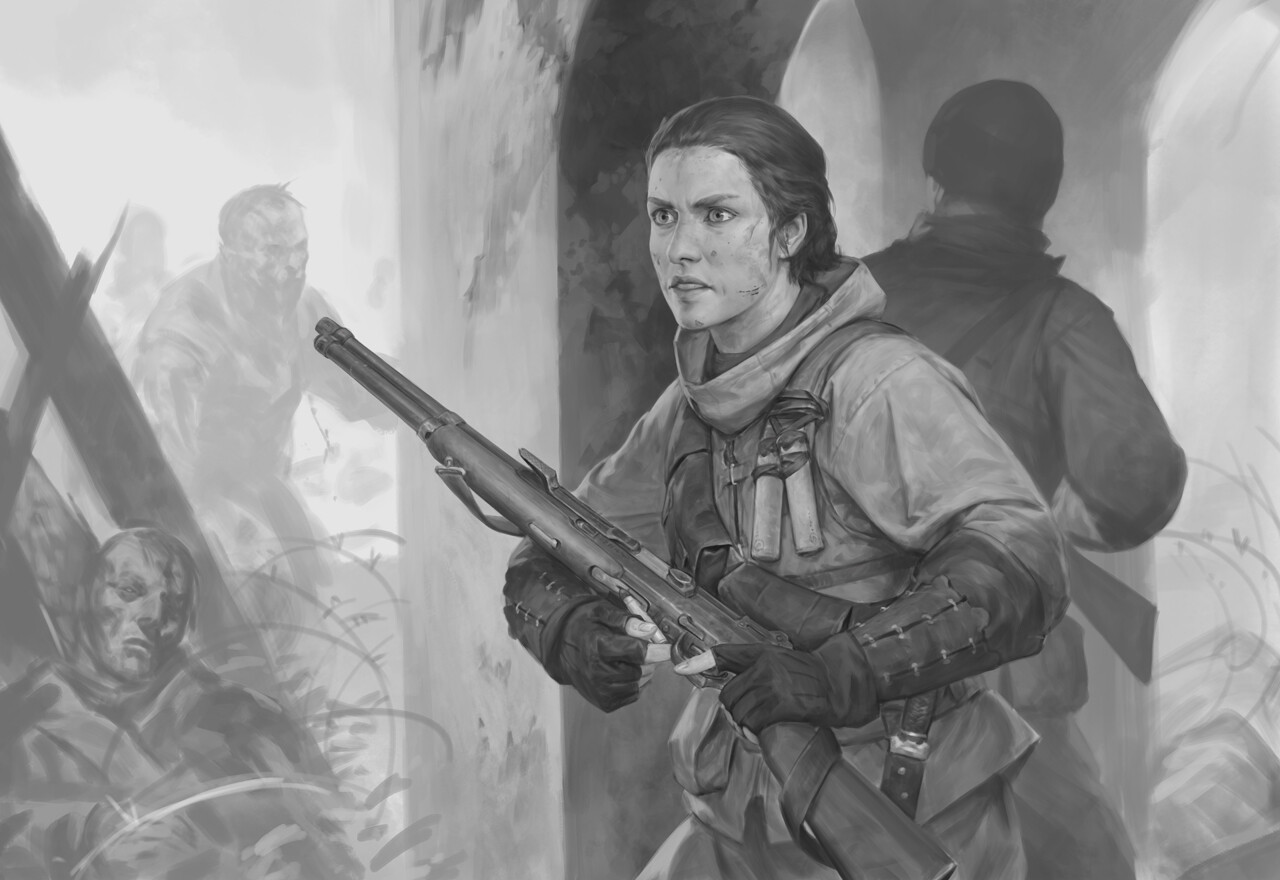 |
| Obligatory image because blogpost. Also because Stepan Alekseev. Artstation. |
[1] = mundane power level NPCs: villagers, skellingtons, imps, coyotes, hired guns.
[2] = impressive power level NPCs: knights, trolls, velociraptors, actual bears, commandos.
[3] = boss power level NPCs: liches, hell pigs, dragons, t-rexes, powered battle armor suits.
[1] 3HP, 10 STR/DEX/WIL; weapon (d6)
- Simple quirk and obvious weakness
- Behavior, strength, or annoyance
- Critical Damage: impactful and very likely weird
[2] 8HP, 13 STR/DEX/WIL; weapons (d8+d6)
- Intimidating presence or magical effect
- Possible blast damage or spells
- Critical Damage: context-altering and dangerous
[3] 12HP, 17 STR/DEX/WIL; weapons (d10+d8, blast)
- Context-altering effects and strategies
- Highly intelligent and/or crafty, will exploit players
- Critical Damage: Peace out, suckers, you’re dead
Armor is added when it makes sense. A lich does not have armor. A death knight probably has 3 armor. A a budget merc with an submachine gun probably has 1 armor. If it is plausible and consistent, it is plausible and consistent. If not, skip it.
At a glance you've got the name, the numbers, the options for attacks, and the flavor that tells you a lot more about what is actionable and tactical for this creature than anything prior. The flavor here (you could call it "narrative capital" or something snooty like that, if you want to make this all sound more like game theory) is what is most important, and it's this sort of brief, punchy content that will differentiate any given monster from another. As in, a tiny bear and a kobold are both [1], they have identical stats, except we could say:
Tiny Bear [1]; fluffy and fun-sized, down to cuddle but is always hungy
Kobold [1]; no class and wearing a pot on its head, will chew off your fingers
You could add more (or less!) than that, but the point is that though numerically identical, the creatures are very different from each other. One or two sentences of flavor makes or breaks what you need to know about them in any sort of bestiary, and it is that stuff that sets them apart much more than if the tiny bear has STR 12 while the kobold has STR 13! You get the idea. When in doubt, critical damage effects can speak volumes about what a given NPC can do that sets it apart from the rest.
The [1] power level is just Chris' excellent 3hp, Sword (d6) concept as-is. The two higher tiers are that same idea scaled up for plausibly bigger threats. And... that's it. Say goodbye to monster bookkeeping. You deftly get the knack for looking at any potential NPC and quickly assigning it [1], [2], or [3], then BAM, you have actionable fiction and we're playing.
I invite readers to do this same sort of three-tier catch-all template for other popular RPGs, and share the results for posterity.


0 Comments