❤ . .❤ . .❤

Defining African Identity Today
In our contemporary times, we have to accept that identities and terminologies change as circumstances change: There is no such thing as a trans-historical African identity. [1][2] Therefore, in Africa’s ancient history the term ‘African’ as an identity would have had no meaning; people defined themselves as members of kingdoms, religions, and ethnic groups. [1] However, these identities were still of people in the continent we call Africa.
The True Negro
The True ARABS
The True sword dance of the Sabaean women
The Sabaeans that colonized Meroe (Marwa) and the Blue Nile (Astaboras) were probably the Ethiopians that Herodotus called the tallest and blackest of men.
The sword dance of the Sabaean women mentioned by the Greeks is probably still practiced by the Afar women At the top who still occupy the Horn and the Yemen.
Original, all of North Asia, is Africa Africa Original Name = Alkebulan = Country of the Blackheads people. The White Greeks and the White Romans e,were the second two major groupss-precursors, of course after the Persians, who brought a great change, and difference in the blood--stream of the Africans, and as well so, in part of Africa treritoria's
Egyptians, E-thi-o’-pi-ans, Nubians and Hebrews are the Same Ethnic People: NILE VALLEY: North Africa / Sahara / Horn of Africa and West Asia..
SO LET'S CLEAR UP A FEW THINGS!..THE EARTH IS BILLIONS OF YEARS OLD AND SO IS THE BLACK RACE THEY HAVE NO KNOWN BIRTHDATE!. FACTS THE SO CALLED WHITE RACE IS AROUND 6-15 THOUSAND YEARS OLD 2,000 YEARS OF CIVILITY FACTS THE AFRICANS HAVE BOOKS OLDER THAN THAT.
THERE IS A AFRICAN SAYING "YOU CAN NEVER BE OLDER THAN YOUR PARENTS.

Black, or Blackness, tells you how you look without telling you who you are, whereas Africa, or Africans, relates you to land, history, and culture– John Hendrik Clarke
Numidia has also been classified by European and Arab historians as a Caucasian- or Semetic-built civilization. "
So you mean authentic Classical Arab historians or the pale Arab historians who just promulgated and copied the work of Europeans?
As far as the Sabeans, scholars don't agree on anything. It is not known how much the Sabeans influenced the Axumites or the Axumites the Sabeans. They had civlizations that were so close to each other that there was a lot of mutual influence and migration. One thing that can be said for sure is that both the Sabeans and the Axumites were black!
The fact that the first Muslims Arabs and the Arabs before Islam were black is something that authors like A. Moore continuously fails to take into account. And these original Arabs and their lastng remnants int he Arab world need to be distinguished from the white-washed pale Arabs.
I wish authors like this would focus on the real history of the pale Arabs and their non-Arab slave roots, the true Arab lineage of the black Arabs and how these facts are hidden from most of us. He could also perhaps focus on race and color issues among Latin American nations and what they generally feel about being Native American and black.
Posted in Afro Arabs, afro asiatic, anthrolpology, DNA, Haplogroup L2 and L3 in West Asia, Haplogroups L4, L2a1, L5, L6, L7, Oman mtDna, Saudi Arabia mtDna, Yemen mtDna with tags Haplogroup L, Haplogroup L in Yemen and Oman, Haplogroup L mtDNA in Saudi Arabia, Haplogroup L2 and L3 in Saudi Arabia, Haplogroup L2 and L3 in South West Asia, Haplogroups in Saudi Arabia, Haplogroups L4, L5, L6 and L7, Queen of Sheba, Saba, Sabaeans, Sheba, Yemini Haplogroup
Sabaeans, Habeshas of north Africa asia.ሳቢያ, ሃሳሳ የሰሜን አፍሪካ አሊያ.

“Yemen የመን / Oman ኦማን”
Sabaeans, Habeshas of South West Asia.”
 Posted in Afro Arabs, afro asiatic, anthrolpology, DNA, Haplogroup L2 and L3 in West Asia, Haplogroups L4, L2a1, L5, L6, L7, Oman mtDna, Saudi Arabia mtDna, Yemen mtDna with tags Haplogroup L, Haplogroup L in Yemen and Oman, Haplogroup L mtDNA in Saudi Arabia, Haplogroup L2 and L3 in Saudi Arabia, Haplogroup L2 and L3 in South West Asia, Haplogroups in Saudi Arabia, Haplogroups L4, L5, L6 and L7, Queen of Sheba, Saba, Sabaeans, Sheba, Yemini Haplogroup
Haplogroups L1,L2,L3A in the Near East reach their highest frequency in the Yemen Hadramawt (~35%).
Other Arab populations—Palestinians, Jordanians, Syrians, Iraqis, and Bedouin—have ~10%–15% of lineages of
sub-Saharan African Origin. These types are rarely shared between different Arab populations.
By contrast, non-Arab Near Eastern populations—Turks, Kurds, Armenians, Azeris, and Georgians—have few or no such lineages, suggesting that gene flow from Africa has been specifically into Arab populations.
For comparison, southern European mtDNAs include only ~2% of these lineages, and northern Europeans <1% (Richards et al.2000).
The only European Region to stand out is Iberia, where ~4% of mtDNAs belong to these clusters, probably a trace of the
Medieval Moorish conquests
(Côrte-Real et al. 1996; Richards et al. 2000).

The most extensive pan-African haplotype (16189 16192 16223 16278 16294 16309 16390) is in the L2a1 haplogroup.
This sequence is observed in West Africa among the Malinke, Wolof, and others; in North Africa among the Maure/Moor
Tuareg in North Africa and West Africa and among the East African Dinka and Somali.
እ.ኤ.አ. በግንቦት 1975 የተቋቋመው የምዕራብ አፍሪካ ኢኮኖሚ ማህበረሰብ ምዕራብ አፍሪካን ከ 1999 ጀምሮ የሚከተሉትን 15 ግዛቶችን ያመለክት ነበር: [6]
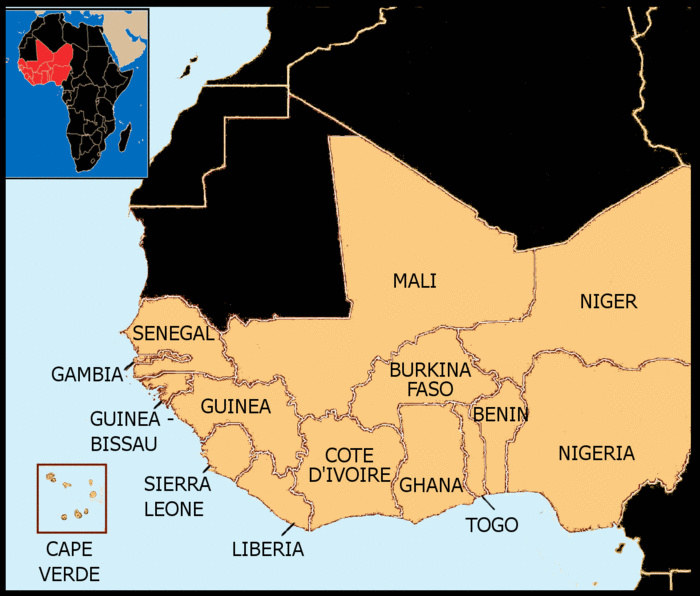
Moors – Wikipedia, the free encyclopedia
The African Maure
Mauritania – Maures
HAPLOGROUP L2a
L2
There is also evidence from one sample (Semino et al. 1989) that in parts of Sicily, which was held by the Arabs between 8251091 a.d.
Haplogroup L1 and Haplogroup L2 amount to ~4%.

Macro-Haplogroup L Familia
In
The Arabian Peninsula
Sub-Saharan Africa L lineages in Saudi Arabia account for 10% of the total. χ2 analyses showed that there is not significant regional differentiation in this Country. However, there is significant heterogeneity (p < 0.001) when all the Arabian Peninsula countries are compared. This is mainly due to the comparatively high frequency of sub-Saharan lineages in Yemen (38%) compared to Oman-Qatar (16%) and to Saudi Arabia-UAE (10%). Most probably, the higher frequencies shown in southern countries reflect their greater proximity to Africa, separated only by the Bab’al Mandab strait.
However, when attending to the relative contribution of the different L haplogroups,
Qatar, Saudi Arabia and Yemen are highly similar for their L2 (36%), L3 (34%) and L0 (21%) frequencies whereas in
Oman and UAE the bulk of L lineages belongs to L3 (72%). In this enlarged sample of Saudi Arabs,
Representatives of all the recently defined East African haplogroups L4 , L5 , L6 and L7 , have been found.
The only L4 Saudi haplotype belongs to the L4a1 subclade defined by (16207) T/C transversion. Although it has no exact matches its most related types are found in Ethiopia.
Four L5 lineages have been found in Saudi Arabia all have the same haplotype that belongs to L5a1 defined in the HVSI region by (16355 – 16362) motif.
It has matches in Egypt and Ethiopia. L6 was found the most abundant clade in Yemen . It has been now detected in Saudi Arabia but only once.
This Haplotype (16048-16223*-16224-16243-16278*–16311) differs from all the previous L6 lineages by the presence of mutation (16243).
In addition it lacks the (16362) transition that is carried by all L6 lineages from Yemen but has the ancestral (16048) mutation only absent in one Yemeni lineage.
This Saudi type adds L6 variability to Arabia, because until now L6 was only represented by a very abundant and a rare haplotype in Yemen.
Attending to the most probable geographic origin of the sub-Saharan Africa lineages in Saudi Arabia, 33 (61%) have matches with East Africa, 7 (13%) with Central/West Africa whereas the rest 14 (26%) have not yet been found in Africa.
Some of them belong to haplogroups with Western Africa origin and the other half to Haplogroups with Eastern Africa adscription. It is also notable frequencies of Haplogroup L lineages reached the area as consequence of slave trade, but more ancient historic contacts with NorthEast Africa are also well documented.
The mtdna Of the Haplogroup L family remains indigenous in these Regions. (ex. 15o,000 b.p. to 70,ooo b.p. hap-grps Lo-L4)
THE TRUTH WILL SET YOU FREE "if you can find it"… The sad TRUTH about the TRUTH
ZoSo's TRUTHTALK13 https://zosotruthtalk.wordpress.com/page/34/

We compared the frequency of Haplogroups L1, L2, L3A in
Jewish Communities from the Near East with that in non-Jewish communities residing historically in the same area (table 1).
Near Eastern Jewish groups have smaller frequency of mtdna % in
Haplogroups L1, L2, L3A
(as, indeed, do Ashkenazi Jews [Thomas et al. 2002]).
The only exception is in Jews from Yemen, but, even here, these lineages amount only to a quarter of their frequency in the non-Jewish sample from the Hadramawt.
It is conceivable that Haplogroups L1, L2, L3A have been lost from the Jewish communities as a result of Genetic Drift
Although the independent loss of both L1 and L2 from all Jewish groups seems unlikely.
A old Yemeni women

{However, L2a1a, as defined by a substitution at (np 16286)
(Salas et al. 2002), is now supported by a
Coding-region marker (np 3918) (fig. 2A) and was found in four of six Yemeni L2a1 lineages.
L2a1a occurs at its highest frequency in SouthEastern Africa
(Pereira et al. 2001; Salas et al. 2002).
Both the frequent founder haplotype and derived lineages
(with 16092 mutation) found among
Yemenis have exact matches within Mozambique sequences
(Pereira et al. 2001; Salas et al. 2002).
Most Ethiopian L2a1 sequences share mutations at nps 16189 and 16309 (L2aβ2 [Salas et al.2002]),
and a minor portion, L2a1c, shares mutations at nps 16209, 16301, and 16354
(within cluster L2a α1 [Salas et al. 2002]).
The L2a1β2 HVS-I motif shows a pan-African spread (Salas et al. 2002).
Whereas the majority (26/33) of African American L2a complete sequences could be
partitioned into four subclades by substitutions at nps 3495, 3918, 5581, and 15229
(Torroni et al. 2001; Howell et al.2004),
None of these were observed in our Ethiopian L2a1 samples.
A single L2d1 sequence from the Yemeni sample shares the haplotype that has so far been
Observed in Sudan and in SouthEastern Africa (Salas et al. 2002).
Consistent with figure 7a of Salas et al. (2002),
Ethiopian L2b sequences form a subset of a predominantly West African clade,
Distinguished from West African lineages by a transition at np 16145.}
Several other lines of evidence also support recent Introgression – Hybridization
mtDNA lineages among Ethiopian, Egyptian, and Yemeni populations,
the MDS plot (fig. 3) clustered them, together with Egyptians, in between
the Near Eastern and the West African and Southern African clusters
Consistent with that, the admixture analysis showed the Yemeni population as a
Hybrid of Predominantly Ethiopian and Near Eastern maternal Gene pools,
which provides no significant support for gene flow from Mozambique (table 2).
A SEMETIC Yezidi boy with traditional braids,

D-ici-et-d-ailleurs: A Yezidi boy with traditional braids, Sinjar, Iraq 1951 pair of photographe explorer Wilfred Thesiger. Photo Black, Shamanism, Middle East, Braids, Oxford, Ethnic, Braided Hair, People, World
Sephardi Jews: https://en.wikipedia.org/wiki/Sephardi_Jews
More broadly, the term Sephardim has today also come to refer to traditionally Eastern Jewish communities of West Asia and beyond who, although not having genealogical roots in the Jewish communities of Iberia, have adopted a Sephardic style of liturgy and Sephardic law and customs imparted to them by the Iberian Jewish exiles over the course of the last few centuries. This article deals with Sephardim within the narrower ethnic definition.
A JAPHETIC Jewwish man.

The Khazars (Turkish: Hazarlar, Tatar: Xäzärlär, Hebrew: כוזרים (Kuzarim), Arabic: خزر (khazar), Ukrainian: Хоза́ри, Russian: Хаза́ры, Persian: خزر, Greek: Χάζαροι, Latin: Gazari/Gasani) were a semi-nomadic Turkic people.

NOTE: Haplogroup L2a1 was found in 5 European Ashkenazi Jewish countries {Doron M. Behar1, Ene Metspalu2, Toomas Kivisild2,}
More than half of the Yemen L1, L2, L3A lineages occur at the tips of the mtDNA tree (cf. Salas et al. 2002),
Indicating that they have been generated by mutation relatively recently.
Furthermore, a majority of the L1, L2, L3A lineages in the Hadramawt—such as members of L2b, L2d, L3b, and L3d—trace back ultimately to West Africa,
So that it is likely that they were delivered to East Africa by the Bantu Dispersals.
{However, Supporting this suggestion, all of the L2a types in the Hadramawt
Occur at Elevated Frequency in the
Bantu Speakers of Mozambique.}
(Pereira et al. 2001; Salas et al. 2002).
Moreover, the chief L1a type in the Hadramawt also occurs at elevated frequency in
Bantu Speakers and is implicated in
The Bantu Dispersals, albeit having been picked up in East Africa en route.
(Salas et al. 2002). (Bantu languages)
Posted in Egypt, Egypt and the Blue Nile, Eritrea, Ethiopia, Haplogroup L2 and L3 in West Asia, L2a1, Nile Valley/Nubia, North Africa, Nubians, Sahara, Semetic People, Semitic, Sephardic Hebrews, The Axumite Kingdom, The Sahel with tags Abeshas, Abyssinia, Afar, African Semite, Amhara Ethiopians, Anthro'pologite, bdellium, Bible, Burseraceae Plants, Celestial Region, commiphora myrrha, Cush, Cushite, Cushites, Egyptians, Ethiopia the Garden of Eden, Ethiopian Queen Makeda, Ethiopians, Falashas, Garden of Eden, Genisis, Gihon, Habesh, Habesha, Hamer Tribe, Hamites, hamito semetic, Haplogroup L2a1, Havilah, Hebrew, Hebrew mtDna, Hebrews of Africa, Horn of Africa, Indigenous Ethiopians, Kebra Negest, Kepsh, Kheb, Khebt, Kushite, Kushitic, L2a1, Land of Cush, Land of Ham, Land of Punt, Land of Punt Hebrews, Makeda, Mekeda, myrrh, Nile Valley, North Africa, Northern Sabaean Territory, Nubians, Omotic, onyx stone, Pison, Queen of Seba, Queen of Sheba, River Atbara, Saba, Sabaeans, Sabean Celestial Region, Sahara, Seba, Semites, Somali Commiphora, South West Asia, West Asia (
This is the Ancient Nuzi Map of Eden, which supports the existence of the African Eden.

Link To Photo Of Original Clay Tablet
The Nuzi Map – made of clay may have been made 120 years before The Flood of Noah or possibly closer to Creation.
“The Nuzi Map portrays the main city within Eden/Aad as being South of the cited mid-point. That is, on the Nuzi Map the city of Aid appears to be perhaps as far south as the Dahlak Archipelago to the Northeast of Asmara, Eritrea (Ethiopia) or nearer the Sudan/Eritrean border or even further to the North perhaps nearer the Suakin Archipelago and Port Sudan. It is very probable that ruins of Eden will be found throughout this entire area.”

The Nuzi map proves the existence of the 4 rivers chronicled in the “Holy Bible”.
Those 4 rivers traverse around the entire country of Ethiopia/HaBashan. Eden is located in Ethiopia.
The term for Eden was Aden/Adin/Aad – which also means: To give pleasures, has the same prime root word as Eden or Adan, to be soft pleasant or voluptuous land. Basically, this was the best place in the whole world to live flourish and be fruitful.
Egypt-Ethiopia/Kush-Nubia-Sudan was some of the places where man walked with GOD in the cool of the day ‘Where the Son of God’ met with man-kind. It would be the same place where, people would return after the Deluge – they would return to their nativity – Afrika.
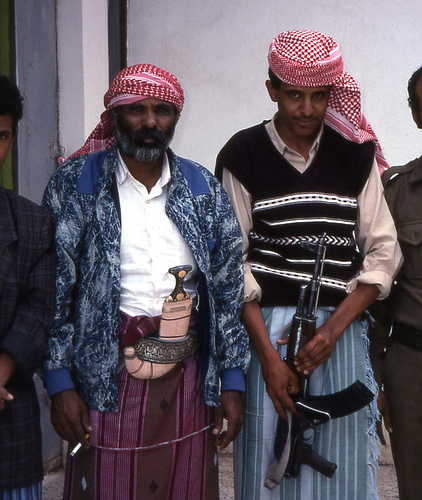
 The true Habbani of Hadramaut (as represented by the man on the right ) are not the fair-skinned Yemenite Jews that have been placed over the internet under the name Habbani. Yemenite Jews are those who have mixed with the Persians and others.
The true Habbaniyya are descendants of the black Azd tribe called Bahila (Bilha, Jacob's concubine) through Dan. Thus, they represent what the Azd looked like and what a majority of the tribes of "Israel" looked like (a few tribes of Israel were not Azd although they were still black). But it is safe to say that even the Habbaniy have absorbed other peoples within the last 2000 years. ; )
The tribal lands of Naphtali according to Salibi “could have comprised” places ranging from the “hinterlands of Birk in the north to that of Jizan” in the Assir with al-Maftil or al-Maftal (Hamza, F., p. 17) – whom Kamal Salibi considers to be the tribe of “Naphtali” (Salibi, p. 192 : ). So much for a people without any history. ; )
The Ottoman (Turkish) Palestinian journalist Al -Arif sits in the midst of the bedouin Hanajra or Hanajireh tribe of Beersheba - among the least modified of the early tribes of "Kedar" and "Nabataean Aramaeans" once dominating northern Arabia and the Syrian deserts.

They are closely related to the Terabin, Amarat, and Ma'aza and Anazah groups who before mixing with "white Syrians" and others were derived from the Rabiyya bin Wa'il of Central Arabia. Such people in more ancient times in Assyria and Mesopotamia were called Amurru or "Rabbean Amorites".
Bedouin chiefs of the Azazmeh in Palestine.

Bedouin chiefs of the Azazmeh in Palestine. The Azazmeh claim descent from the Ma'aza an ancient people mentioned in Assyrian records. (See below) Ma'aza are likely "Massa" of Genesis and "Muzay" and "Marza" of writers like the Persian al-Tabari- "a child" or tribe of Ishmael and descendant of "Nabeet" son of Kedar/Qudhar mentioned by medieval Syrians as signifying the "black" people.

The tribal name Salamat corresponds to the name “Shalometh” or “Shallumith”, found several times in the Bible mainly in Chronicles as a chief of the Izharites - Izhar being the grandson of Levi (1 Chron. 23:18); as a descendant of Eliazar the son of Moses (1 Chronicles 26:25 and 26:28); as a Gershonite, - Gershon or Gershom (probably Banu Jurshum) being a son of Levi (1 Chronicles 23:9); and a woman named “Shulamith” is named the daughter of the Danite (Leviticus 24:11) who lived in the time of Moses.
Contrary to the wishful thinking of many Americans and the distortions of Europeans most so-called Shuwa or Baqqara of Sudan are Arabs that are less mixed than most people in Arabia today... continue reading see link
http://afroasiatics.blogspot.co.uk/2017/07/the-real-black-genesis-demythologizing.html
Kurds from the Zagros Mountains, in traditional dresses. Northern Iraq, ca. early 20th century.

Egyptians, E-thi-o’-pi-ans, Nubians and Hebrews are the Same Ethnic People: NILE VALLEY: North Africa / Sahara / Horn of Africa and West Asia..
We are not Africans because we are born in Africa, we are Africans because Africa is born in us–Chester Higgins, Jr.
With greater interaction with non-Africans, Arabs and later Europeans, then this sense or necessity of a centralized globalized African identity started to take root; with its “ethnogenisis” especially in the Diaspora.[2] Blackness, however is a term imposed at the moment of conquest by the apex oppressors — never by Africans themselves. Unlike the name African, it disconnected the people from their land of origin — and hence their birthright and geographical claim.
‘The people of Africa is more than a name, it is linked to indigenous rights and issues of sovereignty. Africaness and skin color are not verification of each other. ‘Blackness’ fails at every level in both the historical and political context. Africans are the natural people of Africa: The diverse hair textures, the diverse skin hues, are all specific adaptations to living in the diverse African landscape. For this reason alone ‘skin blackness” is certainly not a marker for African identity; far too many native Africans, depending on geography, have light skin. The Motherland of these adaptations and the cultures are primarily Africa; hence the relevance of the name. [2] ‘African’ refers exclusively to the historical people of Africa and their descendants in the Diaspora.In plain language, no one is an African unless they can also be considered a ‘Black’ person. But not every ‘Black person’ is an African.
SO LET'S CLEAR UP A FEW THINGS!..THE EARTH IS BILLIONS OF YEARS OLD AND SO IS THE BLACK RACE THEY HAVE NO KNOWN BIRTHDATE!. FACTS THE SO CALLED WHITE RACE IS AROUND 6-15 THOUSAND YEARS OLD 2,000 YEARS OF CIVILITY FACTS THE AFRICANS HAVE BOOKS OLDER THAN THAT.
THERE IS A AFRICAN SAYING "YOU CAN NEVER BE OLDER THAN YOUR PARENTS.
Black, or Blackness, tells you how you look without telling you who you are, whereas Africa, or Africans, relates you to land, history, and culture– John Hendrik Clarke
Numidia has also been classified by European and Arab historians as a Caucasian- or Semetic-built civilization. "
So you mean authentic Classical Arab historians or the pale Arab historians who just promulgated and copied the work of Europeans?
As far as the Sabeans, scholars don't agree on anything. It is not known how much the Sabeans influenced the Axumites or the Axumites the Sabeans. They had civlizations that were so close to each other that there was a lot of mutual influence and migration. One thing that can be said for sure is that both the Sabeans and the Axumites were black!
The fact that the first Muslims Arabs and the Arabs before Islam were black is something that authors like A. Moore continuously fails to take into account. And these original Arabs and their lastng remnants int he Arab world need to be distinguished from the white-washed pale Arabs.
I wish authors like this would focus on the real history of the pale Arabs and their non-Arab slave roots, the true Arab lineage of the black Arabs and how these facts are hidden from most of us. He could also perhaps focus on race and color issues among Latin American nations and what they generally feel about being Native American and black.
Macro-Haplogroup L Family in “Yemen የመን /
Oman ኦማን” Sabaeans, Habeshas of South
West Asia.”
Sabaeans, Habeshas of north Africa asia.ሳቢያ, ሃሳሳ የሰሜን አፍሪካ አሊያ.
“Yemen የመን / Oman ኦማን”
Sabaeans, Habeshas of South West Asia.”
Posted in Afro Arabs, afro asiatic, anthrolpology, DNA, Haplogroup L2 and L3 in West Asia, Haplogroups L4, L2a1, L5, L6, L7, Oman mtDna, Saudi Arabia mtDna, Yemen mtDna with tags Haplogroup L, Haplogroup L in Yemen and Oman, Haplogroup L mtDNA in Saudi Arabia, Haplogroup L2 and L3 in Saudi Arabia, Haplogroup L2 and L3 in South West Asia, Haplogroups in Saudi Arabia, Haplogroups L4, L5, L6 and L7, Queen of Sheba, Saba, Sabaeans, Sheba, Yemini HaplogroupHaplogroups L1,L2,L3A in the Near East reach their highest frequency in the Yemen Hadramawt (~35%).
Other Arab populations—Palestinians, Jordanians, Syrians, Iraqis, and Bedouin—have ~10%–15% of lineages of
sub-Saharan African Origin. These types are rarely shared between different Arab populations.
By contrast, non-Arab Near Eastern populations—Turks, Kurds, Armenians, Azeris, and Georgians—have few or no such lineages, suggesting that gene flow from Africa has been specifically into Arab populations.
For comparison, southern European mtDNAs include only ~2% of these lineages, and northern Europeans <1% (Richards et al.2000).
The only European Region to stand out is Iberia, where ~4% of mtDNAs belong to these clusters, probably a trace of the
Medieval Moorish conquests
(Côrte-Real et al. 1996; Richards et al. 2000).
The most extensive pan-African haplotype (16189 16192 16223 16278 16294 16309 16390) is in the L2a1 haplogroup.
This sequence is observed in West Africa among the Malinke, Wolof, and others; in North Africa among the Maure/Moor
Tuareg in North Africa and West Africa and among the East African Dinka and Somali.
እ.ኤ.አ. በግንቦት 1975 የተቋቋመው የምዕራብ አፍሪካ ኢኮኖሚ ማህበረሰብ ምዕራብ አፍሪካን ከ 1999 ጀምሮ የሚከተሉትን 15 ግዛቶችን ያመለክት ነበር: [6]
Moors – Wikipedia, the free encyclopedia
The African Maure
Mauritania – Maures
HAPLOGROUP L2a
L2
There is also evidence from one sample (Semino et al. 1989) that in parts of Sicily, which was held by the Arabs between 8251091 a.d.
Haplogroup L1 and Haplogroup L2 amount to ~4%.
Macro-Haplogroup L Familia
In
The Arabian Peninsula
Sub-Saharan Africa L lineages in Saudi Arabia account for 10% of the total. χ2 analyses showed that there is not significant regional differentiation in this Country. However, there is significant heterogeneity (p < 0.001) when all the Arabian Peninsula countries are compared. This is mainly due to the comparatively high frequency of sub-Saharan lineages in Yemen (38%) compared to Oman-Qatar (16%) and to Saudi Arabia-UAE (10%). Most probably, the higher frequencies shown in southern countries reflect their greater proximity to Africa, separated only by the Bab’al Mandab strait.
However, when attending to the relative contribution of the different L haplogroups,
Qatar, Saudi Arabia and Yemen are highly similar for their L2 (36%), L3 (34%) and L0 (21%) frequencies whereas in
Oman and UAE the bulk of L lineages belongs to L3 (72%). In this enlarged sample of Saudi Arabs,
Representatives of all the recently defined East African haplogroups L4 , L5 , L6 and L7 , have been found.
The only L4 Saudi haplotype belongs to the L4a1 subclade defined by (16207) T/C transversion. Although it has no exact matches its most related types are found in Ethiopia.
Four L5 lineages have been found in Saudi Arabia all have the same haplotype that belongs to L5a1 defined in the HVSI region by (16355 – 16362) motif.
It has matches in Egypt and Ethiopia. L6 was found the most abundant clade in Yemen . It has been now detected in Saudi Arabia but only once.
This Haplotype (16048-16223*-16224-16243-16278*–16311) differs from all the previous L6 lineages by the presence of mutation (16243).
In addition it lacks the (16362) transition that is carried by all L6 lineages from Yemen but has the ancestral (16048) mutation only absent in one Yemeni lineage.
This Saudi type adds L6 variability to Arabia, because until now L6 was only represented by a very abundant and a rare haplotype in Yemen.
Attending to the most probable geographic origin of the sub-Saharan Africa lineages in Saudi Arabia, 33 (61%) have matches with East Africa, 7 (13%) with Central/West Africa whereas the rest 14 (26%) have not yet been found in Africa.
Some of them belong to haplogroups with Western Africa origin and the other half to Haplogroups with Eastern Africa adscription. It is also notable frequencies of Haplogroup L lineages reached the area as consequence of slave trade, but more ancient historic contacts with NorthEast Africa are also well documented.
The mtdna Of the Haplogroup L family remains indigenous in these Regions. (ex. 15o,000 b.p. to 70,ooo b.p. hap-grps Lo-L4)
THE TRUTH WILL SET YOU FREE "if you can find it"… The sad TRUTH about the TRUTH
ZoSo's TRUTHTALK13 https://zosotruthtalk.wordpress.com/page/34/
We compared the frequency of Haplogroups L1, L2, L3A in
Jewish Communities from the Near East with that in non-Jewish communities residing historically in the same area (table 1).
Near Eastern Jewish groups have smaller frequency of mtdna % in
Haplogroups L1, L2, L3A
(as, indeed, do Ashkenazi Jews [Thomas et al. 2002]).
The only exception is in Jews from Yemen, but, even here, these lineages amount only to a quarter of their frequency in the non-Jewish sample from the Hadramawt.
It is conceivable that Haplogroups L1, L2, L3A have been lost from the Jewish communities as a result of Genetic Drift
Although the independent loss of both L1 and L2 from all Jewish groups seems unlikely.
A old Yemeni women
{However, L2a1a, as defined by a substitution at (np 16286)
(Salas et al. 2002), is now supported by a
Coding-region marker (np 3918) (fig. 2A) and was found in four of six Yemeni L2a1 lineages.
L2a1a occurs at its highest frequency in SouthEastern Africa
(Pereira et al. 2001; Salas et al. 2002).
Both the frequent founder haplotype and derived lineages
(with 16092 mutation) found among
Yemenis have exact matches within Mozambique sequences
(Pereira et al. 2001; Salas et al. 2002).
Most Ethiopian L2a1 sequences share mutations at nps 16189 and 16309 (L2aβ2 [Salas et al.2002]),
and a minor portion, L2a1c, shares mutations at nps 16209, 16301, and 16354
(within cluster L2a α1 [Salas et al. 2002]).
The L2a1β2 HVS-I motif shows a pan-African spread (Salas et al. 2002).
Whereas the majority (26/33) of African American L2a complete sequences could be
partitioned into four subclades by substitutions at nps 3495, 3918, 5581, and 15229
(Torroni et al. 2001; Howell et al.2004),
None of these were observed in our Ethiopian L2a1 samples.
A single L2d1 sequence from the Yemeni sample shares the haplotype that has so far been
Observed in Sudan and in SouthEastern Africa (Salas et al. 2002).
Consistent with figure 7a of Salas et al. (2002),
Ethiopian L2b sequences form a subset of a predominantly West African clade,
Distinguished from West African lineages by a transition at np 16145.}
Several other lines of evidence also support recent Introgression – Hybridization
mtDNA lineages among Ethiopian, Egyptian, and Yemeni populations,
the MDS plot (fig. 3) clustered them, together with Egyptians, in between
the Near Eastern and the West African and Southern African clusters
Consistent with that, the admixture analysis showed the Yemeni population as a
Hybrid of Predominantly Ethiopian and Near Eastern maternal Gene pools,
which provides no significant support for gene flow from Mozambique (table 2).
A SEMETIC Yezidi boy with traditional braids,
D-ici-et-d-ailleurs: A Yezidi boy with traditional braids, Sinjar, Iraq 1951 pair of photographe explorer Wilfred Thesiger. Photo Black, Shamanism, Middle East, Braids, Oxford, Ethnic, Braided Hair, People, World
Sephardi Jews: https://en.wikipedia.org/wiki/Sephardi_Jews
Sephardi Jews, also known as Sephardic Jews or simply Sephardim, (Hebrew: סְפָרַדִּים, Modern Hebrew: Sfaraddim, Tiberian: Səp̄āraddîm; also יְהוּדֵי סְפָרַד Y'hudey Spharad, lit. "The Jews of Spain"), are a Jewish ethnic division whose ethnogenesis and emergence as a distinct community of Jews coalesced on the Iberian Peninsula around the end of the first millennium, about the year 1000. They established communities throughout Spain and Portugal, where they traditionally resided, evolving what would become their distinctive characteristics and diasporic identity, which they took with them in their exile from Iberia beginning in the late 15th century to North Africa, Anatolia, the Levant, the Balkans, the Baltics, Central, Southern and Northern Europe, as well as the Americas, and all other places of their exiled settlement, either alongside pre-existing co-religionists, or alone as the first Jews in new frontiers.
Their millennial residence as an open and organised Jewish community in Iberia was brought to an end starting with the Alhambra Decree by Spain's Catholic Monarchs in 1492, which resulted in a combination of internal and external migrations, mass conversions and executions.
More broadly, the term Sephardim has today also come to refer to traditionally Eastern Jewish communities of West Asia and beyond who, although not having genealogical roots in the Jewish communities of Iberia, have adopted a Sephardic style of liturgy and Sephardic law and customs imparted to them by the Iberian Jewish exiles over the course of the last few centuries. This article deals with Sephardim within the narrower ethnic definition.
A JAPHETIC Jewwish man.
The Khazars (Turkish: Hazarlar, Tatar: Xäzärlär, Hebrew: כוזרים (Kuzarim), Arabic: خزر (khazar), Ukrainian: Хоза́ри, Russian: Хаза́ры, Persian: خزر, Greek: Χάζαροι, Latin: Gazari/Gasani) were a semi-nomadic Turkic people.

NOTE: Haplogroup L2a1 was found in 5 European Ashkenazi Jewish countries {Doron M. Behar1, Ene Metspalu2, Toomas Kivisild2,}
More than half of the Yemen L1, L2, L3A lineages occur at the tips of the mtDNA tree (cf. Salas et al. 2002),
Indicating that they have been generated by mutation relatively recently.
Furthermore, a majority of the L1, L2, L3A lineages in the Hadramawt—such as members of L2b, L2d, L3b, and L3d—trace back ultimately to West Africa,
So that it is likely that they were delivered to East Africa by the Bantu Dispersals.
{However, Supporting this suggestion, all of the L2a types in the Hadramawt
Occur at Elevated Frequency in the
Bantu Speakers of Mozambique.}
(Pereira et al. 2001; Salas et al. 2002).
Moreover, the chief L1a type in the Hadramawt also occurs at elevated frequency in
Bantu Speakers and is implicated in
The Bantu Dispersals, albeit having been picked up in East Africa en route.
(Salas et al. 2002). (Bantu languages)
Posted in Egypt, Egypt and the Blue Nile, Eritrea, Ethiopia, Haplogroup L2 and L3 in West Asia, L2a1, Nile Valley/Nubia, North Africa, Nubians, Sahara, Semetic People, Semitic, Sephardic Hebrews, The Axumite Kingdom, The Sahel with tags Abeshas, Abyssinia, Afar, African Semite, Amhara Ethiopians, Anthro'pologite, bdellium, Bible, Burseraceae Plants, Celestial Region, commiphora myrrha, Cush, Cushite, Cushites, Egyptians, Ethiopia the Garden of Eden, Ethiopian Queen Makeda, Ethiopians, Falashas, Garden of Eden, Genisis, Gihon, Habesh, Habesha, Hamer Tribe, Hamites, hamito semetic, Haplogroup L2a1, Havilah, Hebrew, Hebrew mtDna, Hebrews of Africa, Horn of Africa, Indigenous Ethiopians, Kebra Negest, Kepsh, Kheb, Khebt, Kushite, Kushitic, L2a1, Land of Cush, Land of Ham, Land of Punt, Land of Punt Hebrews, Makeda, Mekeda, myrrh, Nile Valley, North Africa, Northern Sabaean Territory, Nubians, Omotic, onyx stone, Pison, Queen of Seba, Queen of Sheba, River Atbara, Saba, Sabaeans, Sabean Celestial Region, Sahara, Seba, Semites, Somali Commiphora, South West Asia, West Asia (
This is the Ancient Nuzi Map of Eden, which supports the existence of the African Eden.
Link To Photo Of Original Clay Tablet
The Nuzi Map – made of clay may have been made 120 years before The Flood of Noah or possibly closer to Creation.
“The Nuzi Map portrays the main city within Eden/Aad as being South of the cited mid-point. That is, on the Nuzi Map the city of Aid appears to be perhaps as far south as the Dahlak Archipelago to the Northeast of Asmara, Eritrea (Ethiopia) or nearer the Sudan/Eritrean border or even further to the North perhaps nearer the Suakin Archipelago and Port Sudan. It is very probable that ruins of Eden will be found throughout this entire area.”
The Nuzi map proves the existence of the 4 rivers chronicled in the “Holy Bible”.
Those 4 rivers traverse around the entire country of Ethiopia/HaBashan. Eden is located in Ethiopia.
The term for Eden was Aden/Adin/Aad – which also means: To give pleasures, has the same prime root word as Eden or Adan, to be soft pleasant or voluptuous land. Basically, this was the best place in the whole world to live flourish and be fruitful.
Egypt-Ethiopia/Kush-Nubia-Sudan was some of the places where man walked with GOD in the cool of the day ‘Where the Son of God’ met with man-kind. It would be the same place where, people would return after the Deluge – they would return to their nativity – Afrika.

The true Habbaniyya are descendants of the black Azd tribe called Bahila (Bilha, Jacob's concubine) through Dan. Thus, they represent what the Azd looked like and what a majority of the tribes of "Israel" looked like (a few tribes of Israel were not Azd although they were still black). But it is safe to say that even the Habbaniy have absorbed other peoples within the last 2000 years. ; )
The tribal lands of Naphtali according to Salibi “could have comprised” places ranging from the “hinterlands of Birk in the north to that of Jizan” in the Assir with al-Maftil or al-Maftal (Hamza, F., p. 17) – whom Kamal Salibi considers to be the tribe of “Naphtali” (Salibi, p. 192 : ). So much for a people without any history. ; )
The Ottoman (Turkish) Palestinian journalist Al -Arif sits in the midst of the bedouin Hanajra or Hanajireh tribe of Beersheba - among the least modified of the early tribes of "Kedar" and "Nabataean Aramaeans" once dominating northern Arabia and the Syrian deserts.

They are closely related to the Terabin, Amarat, and Ma'aza and Anazah groups who before mixing with "white Syrians" and others were derived from the Rabiyya bin Wa'il of Central Arabia. Such people in more ancient times in Assyria and Mesopotamia were called Amurru or "Rabbean Amorites".
Bedouin chiefs of the Azazmeh in Palestine.
Bedouin chiefs of the Azazmeh in Palestine. The Azazmeh claim descent from the Ma'aza an ancient people mentioned in Assyrian records. (See below) Ma'aza are likely "Massa" of Genesis and "Muzay" and "Marza" of writers like the Persian al-Tabari- "a child" or tribe of Ishmael and descendant of "Nabeet" son of Kedar/Qudhar mentioned by medieval Syrians as signifying the "black" people.
The tribal name Salamat corresponds to the name “Shalometh” or “Shallumith”, found several times in the Bible mainly in Chronicles as a chief of the Izharites - Izhar being the grandson of Levi (1 Chron. 23:18); as a descendant of Eliazar the son of Moses (1 Chronicles 26:25 and 26:28); as a Gershonite, - Gershon or Gershom (probably Banu Jurshum) being a son of Levi (1 Chronicles 23:9); and a woman named “Shulamith” is named the daughter of the Danite (Leviticus 24:11) who lived in the time of Moses.
Contrary to the wishful thinking of many Americans and the distortions of Europeans most so-called Shuwa or Baqqara of Sudan are Arabs that are less mixed than most people in Arabia today... continue reading see link
http://afroasiatics.blogspot.co.uk/2017/07/the-real-black-genesis-demythologizing.html
Kurds from the Zagros Mountains, in traditional dresses. Northern Iraq, ca. early 20th century.
Ancient Man and His First Civilizations
The True Negro (2)
"Real Africans and the like"
THE ARABS - Who is an Arab?
The Pursian, Turks and their Mulattoes, along with the usual suspects of European Albinos, wishing to write Blacks out of history, have managed to control the conversation so far, as to who is actually an Arab.
Wendell Phillips stands with Yemeni men, including Sheik Al-Barhi (center), a leader of the Bal Harith tribe. (Courtesy American Foundation for the Study of Man)

(Then i remembered what Muammar Ghdaafi said at an arab summit "most of the people in the Peninsula are of Iranian descent there are a few arabs, but most are iranian.")
There are many Liybans of Yemeni Origin one of my best friends is a Libyan of Yemeni Origin.
Ghdaafi Mouth can be Sometimes without boundaries, all arabs know that those in the gulf are Iranians. There is a little community of Non Yemeni Iranians who live in Yemen they speak farsi and keep to themselves.
Northern Yemen was the first to become Muslim and follow the prophet. Northern Yemen is also the biggest mixture with Turks.
Ghdaafi Mouth can be Sometimes without boundaries, all arabs know that those in the gulf are Iranians. There is a little community of Non Yemeni Iranians who live in Yemen they speak farsi and keep to themselves.
Northern Yemen was the first to become Muslim and follow the prophet. Northern Yemen is also the biggest mixture with Turks.
HERE IS WHAT THE RASHAIDA ARABS ACTUALLY LOOK LIKE!
Bani Rasheed people (Rashaida) - Camel herders at the Riyadh Camel market.


There is no Arab tribe today who were not originally described as black. This includes especially the the Azd "jet black and "akhdar", Baliy black Baliyun of Idrisi, Dossariyah Dawasir "tallest and blackest of the Arabs, Rabi'ah (Ka'b Muntafiq, Uqayl) "near black" complexion like Galla of Ethiopia, As'ad, Qays Ailan (Abs, Zubyan, Sulaym - black like lava, Hawazin)" , Shammar (from the Tayyi brother of Madhij in Yemen), Anaezah names now known by people Syrian/Iraqi and fair skinned people in the gulf.
Before there was an Arab nationality there were the true Arabs. Syrians and Iranian eyewitnesses speak of and were very clear about what the Arabs looked like.
PARADISE LOST: THE DISMISSAL OF “AFROASIATIC” BIOLOGICAL ORIGINS

Men of Tihama south of Mecca, which early medieval Arab texts point to as "Canaan"
And the true God of Africa.

Bes (/bɛs/; also spelled as Bisu) and its feminine counterpart Beset are an Ancient Egyptian deity worshipped as a protector of households, and in particular, of mothers and children and childbirth. Bes later came to be regarded as the defender of everything good and the enemy of all that is bad. While past studies identified Bes as a Middle Kingdom import from Nubia, more recent research indicates that he was present in Egypt since the start of Old Kingdom. Mentions of Bes can be traced to pre-dynastic Nile Valley cultures; however his cult did not become widespread until the beginning of the New Kingdom.

Seal Connects Hezekiah with Horite Beliefs

By Alice Linsley
http://jandyongenesis.blogspot.co.uk/2015/12/seal-connects-hezekiah-with-horite.html
December 2, 2015
http://jandyongenesis.blogspot.co.uk/2015/12/seal-connects-hezekiah-with-horite.html
December 2, 2015
His name is mentioned only once in the Old Testament in Isaiah 14:12-15. He is Lucifer – the “Shining One”, the “Son of the Morning” – the Father of the Illuminati -Edomites – their “God of the EAST”. What was his “sin unto death”” – the ORIGINAL REASON for him to be “cast from the Heavens” to this planet called Earth? What has always been the CENTRAL THEME of Lucifer’s minions since the days of Babylon? Isaiah tells us. Lucifer challenged God and His Creation – the very DNA of all living things! Isaiah tells us that Lucifer’s MOTTO is simply: “I WILL ASCEND INTO HEAVEN, I WILL EXALT MY THRONE ABOVE THE STARS OF GOD: ——— I WILL ASCEND ABOVE THE HEIGHTS OF THE CLOUDS; I WILL BE LIKE THE MOST HIGH!” God (the Most High’s) response to this “sin unto death” is simply: “Yet thou shalt be brought down to hell, to the sides of the PIT.”
The sub-human excrement that subscribed to this agenda and manipulated the DNA of humans and animals during the days of Noah, led to the destruction of the planet by means of a Flood. Why should Christians be surprised when modern EDOMITE enemies of Christ declare their intent to continue to repeat the same mistakes – and call it “transhumanism” and “Singularity”?
Christians – with that say introduction, please say hello to Khazar-Edomite phenom Ray Kurzweil (pronounced Cursed-Well).
Now, I am not opposed to technology. I only am opposed to technology in the hands of morally bankrupt atheists who seek to become God and make humans into robots that are easily controlled by them and them alone. That, to me at least, is the recipe for anarchy – for destruction on the grandest scale imaginable. It is not American. It is most definitely not Christian. For the atheist, there simply are no ‘borders’ of morality. There are no “judgment calls” for to them there is no judgment in the next life. Death, to them, is the END of their existence. Thus, there is only the quest for immortality – “Godhood” – i.e. to “live forever in their sins”. In this pit of despair, there can be zero “Hope in Christ Jesus” – for to the Edomite HUMANIST – Christ is only myth that needs to be destroyed by “science” – not faith.
Imagine, if you can – advances in computer technology whereby “nano” robots can create (or even “resurrect” a deceased family member) a soul-less human clone that operates solely from the mind of the “programmer”. Imagine also, if possible, a world wherein there is no “death” – because these same “nano-bots” have completely stopped the “aging” process?
Welcome to the world of Edomite genius Ray (Cursed-Well) Kurzweil.
The Matrix Deciphered: Ten Billion Tomorrows: How Science Fiction Technology Became Reality and ..
CLUES TO IDENTIFY THE MODERN EDOMITES
Because he swore an oath to Jacob over a bowl of RED bean “pottage” – Esau became known as EDOM – the word meaning RED. Red is therefore the symbolic sign of the Edomites. Here are some of the “clues” as to which specific bloodline has historically utilized the color RED.
Clue #1: According to The Jewish Encyclopedia, Vol. IV, p.178: “The Jewish Cabala explains that the color RED signifies bloodshed and JUSTICE for the Jew.”
Clue #2: “Jewish” author Joseph Jacobs in his book Jewish Contributions to Civilization: published and distributed by the “Jewish Publications Society of America (1919) on page 306 declares: “The RED FLAG symbolizes revolutionary socialism. The socialist movement, from its inception up to the present day, has been largely dominated by Jewish influence.”
Clue #3: Arthur Koestler in his book The Thirteenth Tribe, on page 135 proves the fact that the Jewish “Khazars” (the 13th Tribe) were commonly known throughout Europe as the “Red Jews.”
Clue #4: According to a May 1907 feature article in The National Geographic Magazine, “Out of 556 important functionaries of the Bolshevik Revolution, 457 were Jews.” The universal color of Jewish-Communism from the handbook of “Jew” Karl (Mordecai) Marx is red. As in “red nation, red star on the flags, “Red Square” Red China, etc. The Russian Revolution that toppled the czar and which eventually resulted in the GENOCIDE of 66 million ORTHODOX CHRISTIANS in Eastern Europe was planned and financed by “Jews”.
Clue #5: The 66 million ORTHODOX CHRISTIANS in Eastern Europe who were liquidated under the RED STAR of Communism all had access to, and fully understood, the BOOK OF JUBILEE. Millions of copies of the Book of Jubilee were destroyed, and it became a CAPITAL OFFENSE to be found with a copy of this most hated text.
Clue #6: According to Isaiah 1:18, red (or scarlet) is the symbolic color of the adversary to God – and of sin in general.
Clue #7: The international banking industry and the unholy and impure practice of lending money for war implements such as gunpowder and dynamite is led by the RED HEXAGRAM – the “star” that symbolizes 666, the family crest of ROTHSCHILD – which in English literally means “Red Shield”.
Clue #8: According to Revelation 17:3-4, the “great beast of ‘Mystery Babylon’ which John saw was the author of “abominations and death” to the whole earth is scarlet red in color. Furthermore, the WOMAN on the beast controlling it (Lillith) is likewise clothed in scarlet red. The “Jews” most important book (much more so than the 5 Books of Moses) is called the “Babylonian Talmud”.
Clue #9: The anti-Christian, totally satanic system that controlled the “Holy Roman Empire” was/is the RED Dragon according to Revelation 12:3.. Remember the “crest” of the Habsburg royal family of “Romania” and Transylvania prominently featured the Red Dragon?
Clue # 10: The RED HORSE of the Book of Revelation signifies war and of course the ABILITY TO FOMENT WARS according to Rev. 6:4. Remember that Isaac “blessed” Esau/Edom that he would “live by the sword” – that is, he and his posterity would thrive and grow rich by means of war. Logically, the bigger the war, the more profits are made.
Clue #11: In 2 Kings 3:22 and Isaiah 1:15 we read that RED (Edom) represents blood (it matches the color) and of course bloodshed via murder and wars! In this context we read in Romans 9:13 – “AS IT IS WRITTEN, Jacob (aka Israel) have I loved, but Esau have I hated”. Since the New Testament affirms that Jesus Christ is the God of Israel in the flesh, which “tribe” on earth has historically HATED Jesus Christ and reviles Him in their “Talmud”? Which “group” conspired to have Him CRUCIFIED??
There are many, many more clues, but these 11 should make the point quite convincingly. Now, let’s start connecting some dots and complete the big picture, shall we?
After centuries of continuing conflict and wars, the Kingdom of Edom and it’s capital of Petra in Mt. Seir in concert with its blood ally Babylon, eventually conquered Israel and took the Judahite nation “captive” into Babylon around 600 B.C. This was prophesied to occur by the prophet Jeremiah, and indeed it did happen – largely because the descendants of Israel had grown lazy and complacent in their prayers and religious observances. Jeremiah wrote numerous “Lamentations” over the miserable state of the conquered Jerusalem, and who caused this? In Chapter 4:21 Jeremiah declares who is victorious: “Rejoice and be glad, O Daughter (citizens) of Edom —— but “He (God) will visit thine iniquity, o daughter of Edom; He WILL discover thy sins.”
While in the 5th year of his Babylonian “captivity”, Ezekiel sees many visions, and records them for posterity. In Chapter 6 of Ezekiel, we learn that the occupiers of Jerusalem (the conquerors whom Jeremiah earlier identified as being EDOMITES) would completely desecrate the LAND and the HOUSE earlier known as Israel. One must understand that the people, the TRIBE of CHILDREN of ISRAEL were all being held captive in Babylon during this era. The “mountain of Israel” and the LAND of Israel are completely different subjects than the PEOPLE (Children) called Israel. Furthermore, according to the texts of the historian Josephus, he intimates that the Edomite conquerors assumed the IDENTITY of “Israel” at this time – and called themselves the “house of Israel” – primarily because they now possessed the dwellings (house) of their ancient enemy Jacob (Israel). In Chapter 8, Ezekiel witnesses in vision the dark, black magic the “abominations” practiced in the temple – the “house” of Israel. Ezekiel witnesses the and catalogs the sins of the “Edomites” in Jerusalem.
Fast forward now to the reign of the Babylonian king Nebuchadnezzar and the writings of the prophet Daniel. The King of Babylon was dreaming dreams in the night according to Daniel Chapter 2. These dreams were vivid and very lifelike apparently, for the King was deeply troubled by them. He brought all of the Babylonian “magicians, sorcerers, astrologers, and even the Chaldeans” to him, and demanded that they not only tell the king the meaning of his dreams, but in order to prove them – he demanded that they tell him what he had seen in the dream. Of course, the “wise men” of Babylon told old Nebuchadnezzar that he was asking the impossible. This sent the king into a violent rage, and he decreed that all “wise men” – including Daniel, were to be executed.
Daniel, however, received the answer in a night dream himself and went into Nebuchadnezzar and not only correctly told the king what the king had dreamed, but also the interpretation of it. Nebuchadnezzar was astonished. The king, according to Daniel, saw a vision of a great image (a giant man). The image’s head was of fine gold, his breast and arms were made of silver, and his thighs of brass, his legs (two of them) were of iron and his feet part iron and part clay. Then, a massive stone rolled forth (cut without human hands) and smashed the image and broke it to pieces. Thereafter, the large stone grew into a GREAT MOUNTAIN, and filled the WHOLE EARTH.
Here is the interpretation of the dream by Daniel. The head of gold is the kingdom of Nebuchadnezzar’s Babylon – extremely rich in gold. The silver breast and arms represented another world kingdom, which would be replaced eventually by a third kingdom represented by brass. Finally, the legs and feet represented a fourth world kingdom as “strong as iron” which would be divided into two parts. The kings of these two divided kingdoms would mix their seed with the seed of common men (clay) and thus they would be partly strong, and partly weak at times. Finally, when the 4thkingdom would be divided, AT THE TIME OF THESE KINGS shall the “God of Heaven set up a kingdom, which shall never be destroyed: and the kingdom shall not be left to other people, but it shall break in pieces and CONSUME ALL THESE KINGDOMS, and it shall stand for ever.”
Image of Nebuchadnezzar's Dream Corresponding Four World Empires


According to biblical scholars and clues left in the ancient texts, the Babylonians were a mixture of Kenites (the seed of Cain and Lilith) and Edomite blood. The Medo-Persian empire was the lineage of Ishmael who were also allied to Esau/Edom via Esau’s polygamous marriages, the Greek Empire is the Edomite-allied Hittites, while the inhabitants of Rome were the mongrelized Edomite-Horite bloodlines. See how the dots all connect? From the “rock” – the red-city Petra, the Edomite central bank financed these “kingdoms” one after the other. Indeed, the Edomites made their living and their wealth “by the sword.”
Edomite TREASURY at Petra (The Rock)

Now, take a look at the ancient Edomite “treasury” carved out of the RED sandstone rock of Mt. Seir. It was/is today a veritable fortress, and impregnable by any ancient army. The entrance could only be gained via a very narrow canyon. It is easily indeed a wonder of the ancient world –and living proof of the Biblical account of Esau/Edom building his fortress in Petra.

EDOMITE Treasury Vault - Washington D.C. US of A
Notice the obvious similarities in Edomite constructions of their great “Treasuries” both ancient and modern! Specifically, notice the pyramid of Baal, the Babylonian Sun God of the East sitting atop stone pillars!!!

The Sun-God (Sun-Day-Pray) Pagan-Day-God & Amen To

Roman sun-god. Notice the horns, and rays emanating in all directions. This relief is from the excavated Roman baths in Bath, England.
Face of the child within the fertility symbol of the sun's rays on a Roman Catholic altar.

Face in the sun in the pulpit of a church in Scandanavia.

The Fish Mitre

One of the names of this god in Babylon and Philistia was Dagon (dag=fish, on=sun). One of the most common ways of depicting Dagon ...
Cybele, the mystery goddess of Asia Minor and Syria, with an Episcopal mitre on her head.

Images of the Roman Catholic Church
The Pope and Sun god worship

The Pope often displays his mitre publicly. It is one of the most visible evidences that sun worshiop has continued under the name of Christianity.
ISRAEL IS SCATTERED
The Prophet Daniel lived to see his prophecies concerning Babylon’s fall to the Medes king Darius fulfilled. Daniel then foretold the eventual destruction of the great Mede-Persian empire to the Greeks under young Alexander the Great in 330 B.C. In turn, the Roman legions under Caesar conquered the Greek empire, and set the stage for the advent of Jesus the Christ – the “stone which the builders rejected” – the “chief cornerstone” cut out of the mountain without HUMAN HANDS that would eventually fill the whole earth.
False Images of Christ http://macquirelatory.com/False%20Images%20of%20Christ.htm
There are many, many more clues, but these 11 should make the point quite convincingly. Now, let’s start connecting some dots and complete the big picture, shall we?
After centuries of continuing conflict and wars, the Kingdom of Edom and it’s capital of Petra in Mt. Seir in concert with its blood ally Babylon, eventually conquered Israel and took the Judahite nation “captive” into Babylon around 600 B.C. This was prophesied to occur by the prophet Jeremiah, and indeed it did happen – largely because the descendants of Israel had grown lazy and complacent in their prayers and religious observances. Jeremiah wrote numerous “Lamentations” over the miserable state of the conquered Jerusalem, and who caused this? In Chapter 4:21 Jeremiah declares who is victorious: “Rejoice and be glad, O Daughter (citizens) of Edom —— but “He (God) will visit thine iniquity, o daughter of Edom; He WILL discover thy sins.”
While in the 5th year of his Babylonian “captivity”, Ezekiel sees many visions, and records them for posterity. In Chapter 6 of Ezekiel, we learn that the occupiers of Jerusalem (the conquerors whom Jeremiah earlier identified as being EDOMITES) would completely desecrate the LAND and the HOUSE earlier known as Israel. One must understand that the people, the TRIBE of CHILDREN of ISRAEL were all being held captive in Babylon during this era. The “mountain of Israel” and the LAND of Israel are completely different subjects than the PEOPLE (Children) called Israel. Furthermore, according to the texts of the historian Josephus, he intimates that the Edomite conquerors assumed the IDENTITY of “Israel” at this time – and called themselves the “house of Israel” – primarily because they now possessed the dwellings (house) of their ancient enemy Jacob (Israel). In Chapter 8, Ezekiel witnesses in vision the dark, black magic the “abominations” practiced in the temple – the “house” of Israel. Ezekiel witnesses the and catalogs the sins of the “Edomites” in Jerusalem.
NORTHERN HAMITES


HEBREW WATER BOY

The boy shown above is about 15 years old. Unlike Egyptian boys, this Hebrew will eventually grow a full beard.

Just before the Israelite Exodus, the Egyptian Empire was at the height of it's imperial conquests. Approx. 1500 b.c.e., their dominion stretched from the land of the Hittites in the north, to the land of Kush in the south. The Hebrew nations of Midian, Medan, Kedar, Moab, Edom and Ammon were all under tribute to Egypt.
CLOSE-UP OF RAMESSES II CAPTIVES

The captive in the center is definitely a Hebrew. Notice his hair is also in "locks". The captive on the left is Hamitic, probably Libyan; and the captive on the right is also Hebrew, probably of Kedar.
Exploring Jezebel’s Family Tree: Baal & The Queen of Heaven,

Now obviously, we’re dealing with spirits and spirits neither marry nor are given in marriage (Matthew 22:30, Mark 12:25, Luke 20:35). But we are dealing with what, or rather who, I like to call Jezebel’s parents. The second to the last Scripture shared above shows these two spirits in conjunction, but let’s look at perhaps the most obvious story displaying the union between these two principalities and rulers of Hell under Satan.
In the thirty-first year of Asa king of Judah, Omri became king over Israel, and reigned twelve years. Six years he reigned in Tirzah. And he bought the hill of Samaria from Shemer for two talents of silver; then he built on the hill, and called the name of the city which he built, Samaria, after the name of Shemer, owner of the hill. Omri did evil in the eyes of the Lord, and did worse than all who were before him. For he walked in all the ways of Jeroboam the son of Nebat, and in his sin by which he had made Israel sin, provoking the LordGod of Israel to anger with their idols….So Omri rested with his fathers and was buried in Samaria. Then Ahab his son reigned in his place.
In the thirty-eighth year of Asa king of Judah, Ahab the son of Omri became king over Israel; and Ahab the son of Omri reigned over Israel in Samaria twenty-two years. Now Ahab the son of Omri did evil in the sight of the Lord, more than all who were before him. And it came to pass, as though it had been a trivial thing for him to walk in the sins of Jeroboam the son of Nebat, that he took as wife Jezebel the daughter of Ethbaal, king of the Sidonians; and he went and served Baal and worshiped him. Then he set up an altar for Baal in the temple of Baal, which he had built in Samaria. And Ahab made a wooden image. Ahab did more to provoke the Lord God of Israel to anger than all the kings of Israel who were before him. In his days Hiel of Bethel built Jericho. He laid its foundation with Abiram his firstborn, and with his youngest son Segub he set up its gates, according to the word of the Lord, which He had spoken through Joshua the son of Nun. (I Samuel 16:21-26, 28-34)
And [Elijah] answered, “I have not troubled Israel, but you and your father’s house have, in that you have forsaken the commandments of the Lord and have followed the Baals. Now therefore, send and gather all Israel to me on Mount Carmel, the four hundred and fifty prophets of Baal, and the four hundred prophets of Asherah, who eat at Jezebel’s table.”

Ossuary of Miriam, the daughter of Y'shua
So Ahab sent for all the children of Israel, and gathered the prophets together on Mount Carmel. And Elijah came to all the people, and said, “How long will you falter between two opinions? If the Lord is God, follow Him; but if Baal, follow him.” But the people answered him not a word. Then Elijah said to the people, “I alone am left a prophet of the Lord; but Baal’s prophets are four hundred and fifty men. Therefore let them give us two bulls; and let them choose one bull for themselves, cut it in pieces, and lay it on the wood, but put no fire under it; and I will prepare the other bull, and lay it on the wood, but put no fire under it. Then you call on the name of your gods, and I will call on the name of the Lord; and the God who answers by fire, He is God.” (I Kings 18:18-24)

For a quick recap, we see that Omri, bought a hill--a high place--built the city of Samaria on it, and made it a city of pagan worship unto the Baals and Ashtoreths (represented by asherah poles). Then Omri, who was previously the most wicked king of all Israel, was succeeded by his son, Ahab, who not only topped his father’s record of wickedness, but sealed it by marrying the daughter of a pagan priest, EthBAAL, named JezeBEL, who herself was a priestess unto whom she worshipped as the king and queen of heaven. And thus, Ahab sealed the most base royal family of Israel in Biblical history.
Caterpillar?
My lust is your misery: The Locust
Nubian Captives
Alice C. Linsley
In this detail taken from Treasures of Egypt and Nubia, we see a reproduction of a Ippolito Rosellini painting done during the 1825 Franco-Italian expedition to Egypt. Red and black Nubian captives are roped together and the rope is pulled by the Pharaoh whose back is shown at the bottom right.

It is evident from another image that both red and black are bound.

Incense burners found at Addi Akaweh in the Tigray region of Ethiopia bear an inscription that says the region was ruled by three kings jointly ca. 2800 years ago. They ruled with their queens over a population of black and red citizens. One commentators states that the Shebans were red (like the Ainu) and the Hebrews were black. This has not be verified. It seems more likely that Nubian parents often had children of different color. This happens even today and sometimes with twins.
Genesis indicates that Esau was red. Was Jacob black? http://biblicalanthropology.blogspot.co.uk/2013/08/
Following the fall of Babylon under the Medes and Persians, the Children of Israel emigrated throughout the land. Some went back to their homeland of Judea, although it was still occupied by the Edomite “Pharisees” of Babylon –but the vast majority found refuge in central Africa and in Scandinavia. A other group foud refuge in the British Isles and in Ierland.
The Romans identified these “Anglo-Saxons” as the Six Kings of Israel – Roman numeral six – (VI – Kings or VIKINGS). Some of the pure seed of Israel resided in their homeland of Beth-el, or Bethlehem – and some in Nazareth and Galilee. However, this was a time of tremendous unrest politically, as the “Holy Land” of Judea became a place of continuous political intrigue. The Greeks established their pagan deities in Jerusalem, and these were of course eventually displaced by the Romans (the Horites). During these centuries, there were no “prophets of Israel” for true Israelites were indeed scattered. Under both Greek and Roman rule, the Edomite and Babylonian “Judahite” Pharisees, scribes and rabbis of the “Sanhedrin” were the religious leaders of the region. In maps of both the Greeks and Romans, the land south of Judea was known as “Idumea” – another form of Edom.
When Julius Caesar conquered Egypt and annihilated the Greeks in 48 B.C. – he torched the incredible library of Alexandria. Then, the very next year, in 47 B.C. Caesar appointed Antipater, a rabid Edomite hater of true Israel, Procurator of Judea. When Antipater was killed 4 years later, his son Herod gained power, but he was rejected by the Judahite zealots of Judea. Herod, the Edomite, with the aid of a Roman legion laid siege to Jerusalem for a full six months – but it eventually fell and Herod was crowned “king” of Judea in 37 B.C. Herod, the Edomite ally of Caesar and Rome, also controlled the Edomite Sanhedrin, Scribes and Pharisees that were so self-righteously showing off during the ministry of Jesus of Nazareth. Herod the Edomite also was well aware of the prophecies concerning the birth of the Promised Messiah in Bethlehem of Judea – and when the “wise men” of the east came, Herod ordered the death of all young baby boys in the region. Jesus, however, escaped into Egypt, and the rest is the history of the New Testament.
For the next 250 years, the EDOMITE Roman entourage sent countless TRUE Christians to their deaths in the coliseum of Rome. All of this is indisputable fact. Yet, they were powerless against the resurrected Christ and His Spiritual Kingdom. What is amazing is that millions of people actually believe the Edomite lie that PETER was the 1st “Pope” of the Roman Catholic Church. How can this possibly be, when ROME crucified him upside down and condemned to death any Roman who converted to Christ, and who refused to publicly denounce their conversions? Peter was NEVER a pope – for he was martyred for the faith. No, the TRUTH is that PETRA – the ROCK of the EDOMITE TREASURY was the foundation of the Roman Catholic “pagan” church of Edomite idolatry and harlotry. The ruling “cardinals” – dressed in their EDOMITE SCARLET RED ROBES, chooses the EDOMITE POPE to this very day. This is the great secret – while overtly declaring themselves to be mortal enemies, both the “Jews” of Khazaria and the “Catholics” of the Vatican are covertly united as EDOMITES for the Hegelian dialectic antithesis of creating confusion and death in the name of Christ. This is what is meant by the term “Judeo-Christianity”. This also sheds great light on the “Marrano” Khazars who formed the militant Jesuit order in Spain during the 15th century, and explains exactly why “Romania” was so-named and why the CHAZARS are really just synonymous with CAESARS or CZARS!
The answer to this shows the fulfillment of Nebuchadnezzar’s dream – the “division” of the “Holy Roman Empire” the two legs of iron.
Di Fortuna

- Frontispiece from "Di Fortuna," a book on astrology printed in Rome with the approval of Pope Clement VII in 1526. Atlas holds the universe, operated by the forces of good and evil of the Persian Mithra religion. The pope is seated on the circle of the Zodiac as the cosmic ruler, the sun god.
Pope enthroned under a canopy displaying the astrological figures of the Zodiac, Vatican Museum.


This monstrance (case used to display the wafer-god of the mass) in the Vatican Museum has the three letters S.F.S. within a small blaze. Each of these letters is a universal symbol for the number 6 in the pagan mysteries. To the eye of an initiate it simply reads 666.
Note:
- Olcott, commenting on the existence of cult symbolism in Christianity writes: "From the foregoing, which treats merely of the more important solar festivals, it is clear that thes eproducts of paganism are as much in force at present . . . as they ever were, and that Christianity countenances, and in many cases actually adopted and practices pagan rites whose heathen significance is merely lost sight of because attention is not called to the source when those rites have sprung, In short, sun worship, symbolically speaking, lies at the very heart of the great festivals which the Christian church celebrates today, and these relics of heathen religion have, through the medium of their sacred rites, blended with practices and beliefs utterly antagonistic to the spirit which prompted them."
The Keys

Lion-headed image holding the keys, representing power to turn the doors of heaven and hell, power over peace or war on the earth. The keys were held by Pluto, "god of hell," and the chief dieties of Asia Minor, Janus and Cybele.
The Inquisition: Sun God Is love
Executioner's block in the Tower of London.

Deceiver What Is Your Desire?.--:off with his head
Sire, What Is Your Desire?...? --:off with his head. But, Sire ¿ ¿ ¿ ¿
Urn for heating brands and pokers for torture in The Hague, Netherlands.

Note:
Since the doctrine, "Compel them to come in," was developed in the 4th Century by Augustine of North Africa, forced conversion through torture and persecution at the hands of secular authorities was carried out among most Christian nations until the birth of the American Republic.
The Death of A Serpents Seed: Jesuit missionary St. Francis Xavier.
The Death of A Serpents Seed: Jesuit missionary St. Francis Xavier.

Constantine Made the Church

Constantine Made the Church by Sanctioning the Myth Atheist Quotes, Anti Religion, Catholic Churches, The Church, Say What, Satire, Christianity, Amen, Types Of
The Pope and his children, has created their own religion with a “Jesus” copy in the center.
Made their own temple in a pagan city, and claim that their leader is “The Holy father”.

The real issue is Rome it self. Why, and when did God of Abraham, Isaac and Jacob changed his mind, and moved from Jerusalem to the Vatican?
Kenya Devolution and the new Constitution
Horn of Africa is facing a new strategic paradigm, the old order is falling apart and a new Political consciousness emerging!
Haile Selassie Power of the Trinity (23 July 1892 – 27 August 1975),

AND THIS IS THE THOUGHT IMAGE IN ETHIOPIA THAT MANY TRIBE SHARED EQUALLY AMONG EACH OTHER
And it reads:
Semira wrote:
The fate of the Amhara unless it organizes itself will be that of kurds. Kurdistan was one of the powerful mediaval kingdom in the past. Salah-adin who was a reknowned general that decimated the European crussaders was Kurdish. Amharans had Minilik who decimated a more powerful europian army. but that is history now. As the Kurds found themselves in 4 different countries (Turk, Iran, Syria and Iraq) as powerless minorities and persecution of their people is the norm, the fate of the Amhara if it is not organizing itself will be the same. we already have seen Welqait, Tsegede and Northern Wollo going to Tigray (the future country Abay-Tigray) and some already went to the Sudan.
The same will be the case in south and east since TPLF will not go without making sure that the amhara is totally distroyed. Meles had said it openly that land ownership is forbidden in ethiopia by his constitution because he fears that the Amhara will own it. everything this people do is to cut Amhara into pieces and make it unusable hence i don't see why the amhara shouldn't organize to answer for that.
For many native Amharas, Ethiopia still exist while in reality, Ethiopia is auctioned to foreigners in the form of neo-colonialism in which the amhara is being chased from every region just like a mad dog get chased from village to village. The common sense to that is to organize and do something than stuck in the ideology of unity, which proved futile and useless for the last 20 years.
ANOTHER SINCE OF THE "MULTIPLE" OF THE STORY, OF ETHYIOPIA
And it reads:
Halafi Mengedi wrote:
" Semira,
Your propaganda NEFAS became AWLO NEFAS now days. You guys are creating an enemy the enemy is your lie with out any facts. Tigray never involved to kick Amhara from anywhere in the country. Amhara are being kicked by the native of Southern states and they have the right to decide what they want in their states. Your complain is nothing but you want to take someone’s land.
In my view the more Amhara tries to organize the more you loose from all directions because you do not have any legitimate claims to everything you claim. If you think Wolkait is yours, then you will witness when Gonder-Metama claimed by the true owners. When you claim Korom is yours you will see Lasta-Lalibela is being taken by the true owners. When you try to organize Amhara entity then the Agew will organize and take two third of Amhara current state and you will reduce to about 4 to 5 million so called Amhara, that means to control Amhara Tigray needs about 500K one to ten. I am not trying to exaggerate but it is reality and you should understand that. Tigray does not care if Amhara organized but we are bothered by your outright lie, lie, lie…..and it is going to hunt you in a big way. The struggle of Tigray is not ended but chapter two is going to start soon.
Amhara Emperor Tewodros II

What I want to see from Tigray authorities is to evict any Amhara from Adi Arqay, Soqota, Metema, Sanjo, Gonder, Lalibela, Qebo and other smaller villages all Tigrayan lands and ban Amharic from Tigray region. This is first page of chapter two in Tigray “MAHDER”."

Zagwe Dynasty during the 9th & 10th century A.D. Late in the 13th century, the Zagwe usurpers of the throne were swept away,
and Yekuno Amlak restored the Solomonic dynasty of Kings, legitimate heirs of the Aksumite line as
defined by the traditions of the Kebra Nagast. - Source (Kebra Negast, page 176)

Ethiopian Amhara history time✊🏿🇲🇱 so as you guys can see this picture is emperor Tewodros and I hope u guys know what this Jegna did for his country. So emperor Tewodros is older than emperor Menelik and yohanes and emperor Tewodros is the one was raised emperor Menelik and emperor yohanes.Emperor Tewodros taught them many things and said to emperor Menelik you are going to lead SHEWA.And he said to emperor yohanes you are going to lead TIGRAY. So they did what they were told because emperor Tewodros was there father they saw him as there dad. During that time Gonder was the capital city of Ethiopia because emperor Tewodros was in power.
Ras Mengesha Yohannis

Ras Mengesha Yohannis, designated Heir to Yohannis IV, Hereditary Prince of Tigrai.
(I am going to skip some parts and get to the main Points)
so after emperor Tewodros death during that time. Empeor Tewodros wasn't happy with Emperor yohanes because he is the one who betrayed him so after that, The smart Amhara emperor Menelik listened what him father Tewodros told him and was getting guns from djibouti and was getting him army ready and Shewa and Gonder were very powerful.And emperor yohanes as you know disappointed emperor Tewodros and Menelik and Tigray wasn't that powerful. So emperor yohanes didn't really care and with the Sudanese people Came they killed and cut his head. So with the Italians were planning to hit Ethiopia they said "we are not going to hit Gonder and Shewa because they are too powerful and they also noticed that there was a kingdom called THE kingdom of AMHARA". So they said we are not going to the kingdom of Amhara. And they said we can get in to tigray because it's not that powerful as the kingdom of Amhara.

So the battle happen in adwa. So with emperor Menelik found out that they enters Tigray him and his army when to Tigray and as you guys know we won the battle. So my man in point is Emperor yohanes is not a good emperor who did nothing for his country. He just betrayed his father Tewodros ,Tigray and Ethiopia. Then with the Ethiopian victory emperor Menelik made addis Abeba the capital of Ethiopia ,


 3. (12-24.) Darius the King says: May Ahuramazda bear me aid, with the gods of the royal house; and may Ahuramazda protect this country from a (hostile) army, from famine, from the Lie! Upon this country may there not come an army, nor famine, nor the Lie; this I pray as a boon from Ahuramazda together with the gods of the royal house. This boon may Ahuramazda together with the gods of the royal house give to me!
In Darius the Great's "Behistun Inscription" the Lie is mentioned twenty one (21) times:
3. (12-24.) Darius the King says: May Ahuramazda bear me aid, with the gods of the royal house; and may Ahuramazda protect this country from a (hostile) army, from famine, from the Lie! Upon this country may there not come an army, nor famine, nor the Lie; this I pray as a boon from Ahuramazda together with the gods of the royal house. This boon may Ahuramazda together with the gods of the royal house give to me!
In Darius the Great's "Behistun Inscription" the Lie is mentioned twenty one (21) times:
Today Syrians and Iranian and their descendants who've mixed with ArabFair skin was "rare" among them and the Arabs called themselves "the blacks". ians in the peninsula are called Arabs.
Doug - you posted this photograph of a typical North and Central Arabian man from a pure and famous Arab tribe up until the 16th to 18th centuries.
Before there was an Arab nationality there were the true Arabs. Syrians and Iranian eyewitnesses speak of and were very clear about what the Arabs looked like. Fair skin was "rare" among them and the Arabs called themselves "the blacks".
Derviş Nedir? Derviş Ne demek?

Kaynak: http://www.nedir.com/dervi%C5%9F#ixzz4lK3oRLei
The Quraysh descend from the people who founded the Wadi Kenaunah area of southwestern Arabia. Wadhi Kenawnah means” lowland of the Kenaanah tribe”.
They, like all the original Arabs, originated in the South of the Arabian peninsula. Ishmael in southern Arabian tradition is one of the Thamud as are Saleh (Shelah and other sons of Shem) who began moving northward probably between 1500 and 1000 B.C. into Syria carrying their native names with them.
At that time however they were mostly known as Melukhha or Amalekites. Hamites, Semites and Japhetites are all the same people in early Arabic tradition who spread north from the Yemen. Japhet’s sons spread across Africa where they named the Atlas that is why Daris or Teras became the ancestor of the Berbers including Javan. Others spread into the Aegean and north to become the ancestors of the Meds and other black Scythic peoples mentioned in Medieval Muslim texts “as sons of Ham”. That is why Josephus speaks of the children of Noah as the original inhabitants of those places. The descendants of Cathim or Khethim the Amalekite spread across the coasts of the Mediterranean as Josephus states and founded the places in Cyprus and Crete and Mycenae (in the Hyksos period). While in north Africa they became the Ukatameni or Ketama people otherwise known as Sanhaja.
That is the history the Afro-asiatics from the Arabian peninsula and Africa tell whether true or not. Unfortunately Eurasiatics i.e. the Iranians (Scythians in Persia), Syrians (“white Turcki Syrians” as opposed to Phoenicians i.e. Amalekites and other Canaanites) and Europeans in general began to write themselves into the Afro-Asiatic allegory of Noah or Nu inventing a northern origin of Canaanites, a northern Ur of the Chaldees in Turkey somewhere, a northern Noah and his ark, when in fact such names as “Chaldean” only refer to the tribe of Banu Khalid and Khasdim from the Hashid. When the tribes of historical Kush and Ad moved northward from Saba they carried their ancient native totemic tribal names and placed names with them all related to the stars and planets and at the same time various animals. That is why you find at least 3 gardens of Eden with the rivers and the same stories and allegories and myths all over the Middle East and in fact world.
That is why you also find the modern Kinaaniyya tribes in the modern Israel who actually originated further south in the Yemen and Tihama with the original Israel and Canaanites mentioned in the Hebrew Pentateuch or first 5 books of the Bible. Lastly, it is also why you find almost all of the names of the tribes of the Biblical Edom and Canaan living TODAY among the Azd or Kahlan descended people in southern Arabia between the Yemamah in the Nejd and the Eritraean Sea still mostly black as ever. The name for Yemamah is still named Falaj al Aflaj (Channel of the Pelegites) named after their ancient king Falaj or Peleg the king of the region to who divided up the earth i.e. soil with channels.
“Lank hair is the kind of hair that most non-Arab Persians and Romans have while kinky hair is the kind of hair that most Arabs have.” Lisaan al Arab, vol 3. Ibn Mandhur.
 Which he did, but at the price of dooming all of the Black civilizations which still existed. Because as in Europe, Whites were not content with just being a part of the "New Order" they wanted to control and dominate it! Because of the meager population of Arabia, and also because of the Arab tribesman's resistance to his new religion, (he would later offer them the choice of conversion or Death!); Muhammad had no choice but to include Whites in his army. First the Greeks, then when the Romans quit the Western Levant in 639-640 A.D. (at Muhammads invitation), the Romans who remained behind, had no choice but to join him too. But the Caliphs still needed more men; therefore Turkish men were imported from Central Asia as Slave soldiers for the Caliphs army, and Turkish women were imported as Slaves for the Caliphs Harem (a practice that the Berbers (Moors) continued.

On a wishful note: It would certainly be nice if the Chinese Government would also update their website history on the beginnings of Chinese civilization. As it stands now, if you don't already know Chinese history, you certainly won't learn it from their website. Their presentation is "mealy mouthed" confusing, and refuses to acknowledge the obvious influences of Blacks and Whites in China's beginnings. Luckily there are skeletons, Mummies, and scientific studies which do.

At first it was the old-line Greeks and Romans who held sway. But as Turks kept coming in (first as Slave Soldiers), and as their population kept increasing, there could be no doubt as to who would triumph in the end.


زن ایرانی Persian Girls, Persian People, Iranian Women, Persian Culture, Old School, Vintage Woman, Beauty, Cleaning Rugs, Belly Dancers.
There is probably surprise that "Real" Egyptians look as they do, this is certainly not what you see in the White mans Books, television programs, and Movies. That is because the White mans media is merely a tool, or weapon, in the White mans vendetta against Blacks. We have seen his vitriol in describing Blacks; but that would ring hollow - when considered against the majesty of Black achievements in the past. Therefore he has, with the aid of his media, tried to take that past away. His media shows the creators of the worlds great civilizations as Whites, or at the very least, the mixed race people who currently inhabit those lands - But never as the Blacks that they truly were. In the case of Egypt: most "mixed race" and all White Egyptians, live in the large cities of Egypt. Therefore the White man very skillfully uses his media to show the world only those, or what he wants it to see. Thus all that he will show you, is the Whites and "mixed race" people of Egypt.
Female Member of a Tribal Khan Family

(Female Member of a Tribal Khans Family, One of 274 Vintage Photographs Medium: Albumen silver photograph Dates: late 19th-early 20th century Dynasty: Qajar Vintage Photographs, Brooklyn, Persian Culture, Late 20th Century, Moorish, In Memory Of, Middle East, Dates, Museums.)

Unfortunately, today Most Arabs are Arabs in name only not by blood. This is a true designed reality. And now, we (have to) look to face the new face now
Yemen, Bedouin Yemeni woman. #Yemen #Yemeni
Haile Selassie Power of the Trinity (23 July 1892 – 27 August 1975),

AND THIS IS THE THOUGHT IMAGE IN ETHIOPIA THAT MANY TRIBE SHARED EQUALLY AMONG EACH OTHER
And it reads:
Semira wrote:
The fate of the Amhara unless it organizes itself will be that of kurds. Kurdistan was one of the powerful mediaval kingdom in the past. Salah-adin who was a reknowned general that decimated the European crussaders was Kurdish. Amharans had Minilik who decimated a more powerful europian army. but that is history now. As the Kurds found themselves in 4 different countries (Turk, Iran, Syria and Iraq) as powerless minorities and persecution of their people is the norm, the fate of the Amhara if it is not organizing itself will be the same. we already have seen Welqait, Tsegede and Northern Wollo going to Tigray (the future country Abay-Tigray) and some already went to the Sudan.
The same will be the case in south and east since TPLF will not go without making sure that the amhara is totally distroyed. Meles had said it openly that land ownership is forbidden in ethiopia by his constitution because he fears that the Amhara will own it. everything this people do is to cut Amhara into pieces and make it unusable hence i don't see why the amhara shouldn't organize to answer for that.
For many native Amharas, Ethiopia still exist while in reality, Ethiopia is auctioned to foreigners in the form of neo-colonialism in which the amhara is being chased from every region just like a mad dog get chased from village to village. The common sense to that is to organize and do something than stuck in the ideology of unity, which proved futile and useless for the last 20 years.
ANOTHER SINCE OF THE "MULTIPLE" OF THE STORY, OF ETHYIOPIA
And it reads:
Halafi Mengedi wrote:
" Semira,
Your propaganda NEFAS became AWLO NEFAS now days. You guys are creating an enemy the enemy is your lie with out any facts. Tigray never involved to kick Amhara from anywhere in the country. Amhara are being kicked by the native of Southern states and they have the right to decide what they want in their states. Your complain is nothing but you want to take someone’s land.
In my view the more Amhara tries to organize the more you loose from all directions because you do not have any legitimate claims to everything you claim. If you think Wolkait is yours, then you will witness when Gonder-Metama claimed by the true owners. When you claim Korom is yours you will see Lasta-Lalibela is being taken by the true owners. When you try to organize Amhara entity then the Agew will organize and take two third of Amhara current state and you will reduce to about 4 to 5 million so called Amhara, that means to control Amhara Tigray needs about 500K one to ten. I am not trying to exaggerate but it is reality and you should understand that. Tigray does not care if Amhara organized but we are bothered by your outright lie, lie, lie…..and it is going to hunt you in a big way. The struggle of Tigray is not ended but chapter two is going to start soon.
Amhara Emperor Tewodros II

What I want to see from Tigray authorities is to evict any Amhara from Adi Arqay, Soqota, Metema, Sanjo, Gonder, Lalibela, Qebo and other smaller villages all Tigrayan lands and ban Amharic from Tigray region. This is first page of chapter two in Tigray “MAHDER”."
and Yekuno Amlak restored the Solomonic dynasty of Kings, legitimate heirs of the Aksumite line as
defined by the traditions of the Kebra Nagast. - Source (Kebra Negast, page 176)
Yekuno Amlak (10 Aug 1270-1285 A.C.E.) (d. 19 Jun 1285 A.C.E.)

Ethiopian Amhara history time✊🏿🇲🇱 so as you guys can see this picture is emperor Tewodros and I hope u guys know what this Jegna did for his country. So emperor Tewodros is older than emperor Menelik and yohanes and emperor Tewodros is the one was raised emperor Menelik and emperor yohanes.Emperor Tewodros taught them many things and said to emperor Menelik you are going to lead SHEWA.And he said to emperor yohanes you are going to lead TIGRAY. So they did what they were told because emperor Tewodros was there father they saw him as there dad. During that time Gonder was the capital city of Ethiopia because emperor Tewodros was in power.
Ras Mengesha Yohannis

Ras Mengesha Yohannis, designated Heir to Yohannis IV, Hereditary Prince of Tigrai.
(I am going to skip some parts and get to the main Points)
so after emperor Tewodros death during that time. Empeor Tewodros wasn't happy with Emperor yohanes because he is the one who betrayed him so after that, The smart Amhara emperor Menelik listened what him father Tewodros told him and was getting guns from djibouti and was getting him army ready and Shewa and Gonder were very powerful.And emperor yohanes as you know disappointed emperor Tewodros and Menelik and Tigray wasn't that powerful. So emperor yohanes didn't really care and with the Sudanese people Came they killed and cut his head. So with the Italians were planning to hit Ethiopia they said "we are not going to hit Gonder and Shewa because they are too powerful and they also noticed that there was a kingdom called THE kingdom of AMHARA". So they said we are not going to the kingdom of Amhara. And they said we can get in to tigray because it's not that powerful as the kingdom of Amhara.
So the battle happen in adwa. So with emperor Menelik found out that they enters Tigray him and his army when to Tigray and as you guys know we won the battle. So my man in point is Emperor yohanes is not a good emperor who did nothing for his country. He just betrayed his father Tewodros ,Tigray and Ethiopia. Then with the Ethiopian victory emperor Menelik made addis Abeba the capital of Ethiopia ,
Dawit I
Taddesse Tamrat discusses a tradition that early in his reign, Dawit campaigned xagainst Egypt, reaching as far north as Aswan. In response, the Emir forced the Patriarch of Alexandria, Matthew I, to send a deputation to Dawit to persuade him to retire back to his kingdom. Taddesse concludes, "There seems to be little or no doubt that, on the eve of the advent of the Burji dynasty of Mamluk Egypt, King Dawit had in fact led his troops beyond the northern frontiers of his kingdom, and created much havoc among the Muslim inhabitants of the area who had been within the sphere of influence of Egypt since the t hirteenth century."[2] The Emperor apparently had a much friendlier relationship with the Sultan's successor, for according to the medieval historian al-Maqrizi, Dawit sent 22 camels laden with gifts to Berkuk, the first Sultan of the Burji dynasty.[3]
He confronted the problem of raids from the Muslim kingdoms on his eastern border with numerous counterattacks on those kingdoms. According to al-Maqrizi, in 1403 Emperor Dawit pursued the Sultan of Adal, Sa'ad ad-Din II, to Zeila, where he killed Sa'ad ad-Din and sacked the city. However, another contemporary source dates the death of Sa'ad ad-Din to 1415, and gives the credit to Emperor Yeshaq.[
Dawit II of Ethiopia

The Ethiopian–Adal war
With the death of Sultan Abu Bakr in 1520, a young Imam Ahmad ibn Ibrahim al-Ghazi consolidated his hold on the Adal Sultanate, making his candidate Umar DinSultan, then began a campaign to extinguish the Empire of Ethiopia. The Imam crossed the Awash River and entered Fatagar in 1528, looting and burning the town of Badeqe before Dawit could arrive with his army. The Imam began to withdraw, retreating across the Samara, a tributary of the Awash. The Imam's followers were accustomed to making lightning raids on Ethiopian territory, swiftly attacking and quickly returning home; they had no experience in pitched battles, and Imam Ahmad Gragn struggled with numerous desertions.[4] The Emperor Dawit caught up with Imam Ahmad Gragn's forces, and they engaged in battle on either March 7 or March 9, 1529 at Shimbra Kure, but failed to destroy the Imam's army. While not a clear victory for the Imam, this battle still proved to the Imam's followers that they could fight the Ethiopian army.
❤. .❤. .❤

All surnames ending with khan are related to the Babarish Mongolian Turkic descendant:
Gog & the Edomite K-hun-zarian Invasion
“The Septuagint identifies Agag with Gog... Agag is a generic name for the kings of Amalek... Amalek is a tribe descended from Esau.”
Any color person or non-colored person must know and get this important knowledge
To can understand the matrix of Mongol kharazi Turcki - DRAGON Labyrinth alliance
That old serpent of mass destruction.
The ancient Turki-Persians understood the power of the Lie: they were probably the first Middle Eastern Blacks to have day-to-day dealings with Whites; owing to the large numbers of Arian's immigrating across their Eastern borders. Perhaps it was these White people that Darius the Great (522-486 B.C.); had in mind when he inscribed the following on the south retaining wall of his palace at Persepolis.
Inscription:
 3. (12-24.) Darius the King says: May Ahuramazda bear me aid, with the gods of the royal house; and may Ahuramazda protect this country from a (hostile) army, from famine, from the Lie! Upon this country may there not come an army, nor famine, nor the Lie; this I pray as a boon from Ahuramazda together with the gods of the royal house. This boon may Ahuramazda together with the gods of the royal house give to me!
Inscription:
55. (4.36-40.). Darius the King says: You who shall be king hereafter, protect yourself vigorously from the Lie; the man who shall be a Lie-follower, him do you punish well, if thus you shall think, "May my country be secure!"
Doug - you posted this photograph of a typical North and Central Arabian man from a pure and famous Arab tribe up until the 16th to 18th centuries.
Before there was an Arab nationality there were the true Arabs. Syrians and Iranian eyewitnesses speak of and were very clear about what the Arabs looked like. Fair skin was "rare" among them and the Arabs called themselves "the blacks".
Derviş Nedir? Derviş Ne demek?

What is Dervish?
Persian is a word that means "poor". Used for sect members. Most of the members of the genocide sect are poor people. The Dervish promise means "door threshold" among the mystic expressions.
Kaynak: http://www.nedir.com/dervi%C5%9F#ixzz4lK3oRLei
The Quraysh descend from the people who founded the Wadi Kenaunah area of southwestern Arabia. Wadhi Kenawnah means” lowland of the Kenaanah tribe”.
They, like all the original Arabs, originated in the South of the Arabian peninsula. Ishmael in southern Arabian tradition is one of the Thamud as are Saleh (Shelah and other sons of Shem) who began moving northward probably between 1500 and 1000 B.C. into Syria carrying their native names with them.
At that time however they were mostly known as Melukhha or Amalekites. Hamites, Semites and Japhetites are all the same people in early Arabic tradition who spread north from the Yemen. Japhet’s sons spread across Africa where they named the Atlas that is why Daris or Teras became the ancestor of the Berbers including Javan. Others spread into the Aegean and north to become the ancestors of the Meds and other black Scythic peoples mentioned in Medieval Muslim texts “as sons of Ham”. That is why Josephus speaks of the children of Noah as the original inhabitants of those places. The descendants of Cathim or Khethim the Amalekite spread across the coasts of the Mediterranean as Josephus states and founded the places in Cyprus and Crete and Mycenae (in the Hyksos period). While in north Africa they became the Ukatameni or Ketama people otherwise known as Sanhaja.
That is the history the Afro-asiatics from the Arabian peninsula and Africa tell whether true or not. Unfortunately Eurasiatics i.e. the Iranians (Scythians in Persia), Syrians (“white Turcki Syrians” as opposed to Phoenicians i.e. Amalekites and other Canaanites) and Europeans in general began to write themselves into the Afro-Asiatic allegory of Noah or Nu inventing a northern origin of Canaanites, a northern Ur of the Chaldees in Turkey somewhere, a northern Noah and his ark, when in fact such names as “Chaldean” only refer to the tribe of Banu Khalid and Khasdim from the Hashid. When the tribes of historical Kush and Ad moved northward from Saba they carried their ancient native totemic tribal names and placed names with them all related to the stars and planets and at the same time various animals. That is why you find at least 3 gardens of Eden with the rivers and the same stories and allegories and myths all over the Middle East and in fact world.
That is why you also find the modern Kinaaniyya tribes in the modern Israel who actually originated further south in the Yemen and Tihama with the original Israel and Canaanites mentioned in the Hebrew Pentateuch or first 5 books of the Bible. Lastly, it is also why you find almost all of the names of the tribes of the Biblical Edom and Canaan living TODAY among the Azd or Kahlan descended people in southern Arabia between the Yemamah in the Nejd and the Eritraean Sea still mostly black as ever. The name for Yemamah is still named Falaj al Aflaj (Channel of the Pelegites) named after their ancient king Falaj or Peleg the king of the region to who divided up the earth i.e. soil with channels.
Fear of Blackness: Descriptions and Ethnogenesis of the original Afro-Arabian tribes of “Moorish” Spain
PART I
“…a fair-skinned Arab is something inconceivable… “ Ibn Abd Rabbu of Cordoba born 9thc. in El Iqd el Farid (The Precious Necklace), quoting Shuraik el-Qadi a 7th century Arab of the clan of Nakha’l of the Maddhij in the Yemen.
“…the Arabs describe their color as black and they describe the color of the non-Arab Persians as red.” Assertion of the 13th c. grammarian Ibn Manzur or Mandhur in Lisaan al Arab, Vol. 4 (born in Tunis or Northern Egypt.)
“Red, in the speech of the people from Hejaz means fair-complexioned, and this color is rare amongst the Arabs. This is the meaning of the saying … a red man as if he is one of the slaves.” From Seyar A’laam al-Nubalaa, vol. 2, by the Syrian Al-Dhahabi (Thahabi),of the century 14thc. A.D.
The Book of Oaths (Kitab al Aiman)
Book 015, Number 4046:
Ayyub said: We were sitting in the company of Abu Musa that he called for food and it consisted of flesh of fowl. It was then that a person from Banu Tamim visited him. His complexion was red having the resemblance of a slave.
“…most Arabs are dark brown in color.” 13th c. Ibn Mandhur,
Lisaan al Vol. 4
“Lank hair is the kind of hair that most non-Arab Persians and Romans have while kinky hair is the kind of hair that most Arabs have.” Lisaan al Arab, vol 3. Ibn Mandhur.
“All the lands became inhabited by Arabs completely mixed with non-Arabs.” Ahmed Amin in Fajr el Islam, 1975, p. 91.
The above quotes cited in The Unknown Arabs, Tariq Berry, published, 2002.
TERMS TO KNOW
Batn – clan; literally meaning ‘from the belly of”
Ibn, bin, banu, beni – meaning “son of”
Harrah or el Harra the northwestern volcanic region of Arabia stretching from border of Jordan southward through region of Medina
Hejaz – western coastal region of Arabia stretching towards Yemen
Nejd – central Arabian land including Riyadh and Yemamah
Totemism – veneration of ancestral consciousness represented by animal names with cosmological significance and associations.
The Yemen – the southern part of the Arabian peninsula
The following treatise documents the tribes of Afro-Arabians descended from the original Arab-speaking occupants of the Arabian peninsula. In the early centuries after the birth of the Muslim Prophet Mohammed early European documents describe the Moors in such descriptive phrases as “black as melted pitch” or “black as burnt brands” as in the epic of Morien. It is more than likely the original Arab populations of Spain that gave rise to such exclamations as they are also often described as black or jet black by authors of Near Eastern derivation.
Although the Arabians were not the first to be called Moors, it was the color of the people leaving the peninsula of Arabia that was mainly due the use of the term “Moor” for black and woolly haired people in Spain, France, Italy and other parts of Europe in Islamic times. When the Chanson de Roland which speaks of the time of the Moorish battles in Gallic France speaks of “those hordes and hordes blacker than the blackest ink – no shred of white on them except their teeth…” it is no mere exaggeration. Anyone familiar with the Arabic writings of the Syrian, Iraqi and Iranian historians up until the 14th century knows that this is also their description of the early “pure” Arab clans of the Arabian peninsula.
Therefore, the use of the term “Moor” in this article refers to the inhabitants of the Arabian peninsula who long after the time of Mohammed shared the appearance of Ethiopians and other sub-Saharan Africans, as well as customs of present day Africans stretching from the present country of Sudan to Somalia in the East to Mauritania, Mali and Nigeria in the West.
Arabian dialects, totemism, ancestral veneration, including knowing the genealogy of cattle and sheep back many generations (almost all early Arabian tribal names are also the names of their animals and have an astronomical reference), matrifocal societies (including worship of Goddesses), the wearing of cowry shells, nose rings, plaited and totemic hair-styles, ululations, hennaed limbs and scarred faces are all African-associated traits and customs most of which date back several thousand years into the Neolithic.
These are the facts of pre-Islamic and early Islamic Arabia, which is why the Greeks and Romans considered Arabia an extension of Ethiopia and for Syrians much of Arabia part of “the Sudan” long after the time of the prophet Muhammed. (See Richmond Palmer’s, Bornu, Sahara and Sudan with regard to the Syrian Al Omari). It was from this colony of “blacks” (as the original Arabs invariably called themselves), that the numerous tribes of the men Europeans once called “Moors” left after the time of the Muslim prophet to also spread over parts of the Middle East, North Africa and the Iberian peninsula.
Although Iranians had settled the Yemen or south of the peninsula in the centuries immediately preceding the Prophet Mohammed; though Turks, Circassians, mercenaries, concubines and slaves from all parts of he world had come to settle the land of the true Arabs later in Islamic times, large numbers of inidigenous peoples of African appearance still occupy the peninsula Arabia preserving their indigenous and original Afro-Arab customs.
Descriptions and Ethnogenesis of the Original Arabs:
The tribes leaving the north and central parts of Arabia occupying the Hejaz and Nejd can be divided into major branches. They include those traditional genealogy called “Ishmaelites” or descendants of Kedar, like the tribes of Qays ibn Ailan or El Nas and El Yas, and the Rabi’ah and Wa’il all based in the central regions of the peninsula. Many of these were “the Saracens” whom Ammianus Marcellinus, Roman general of the 4th c. A.D. claimed had originated “from the cataracts of the Nile” in Sudan.
It is the north and central group of Arabians inhabiting the Jordan, the Harra and the Nejd whose ancestors came to be called Ishmaelites, descendants of Thamud (the second A’d), Kedar and Naba’it (all traditionally children of Ismail). (The Nabataeans were among those known also as Amurru or Amorites in late Assyrian texts.)
In the tradition of Syria and in the later European Jewish or Rabbinic tradition the term “Kushi” signified black peoples, and in fact, became a derogatory term. A European Jewish Targum text Song 1:5 employs the phrase “as black as the Kushi who live in the tents of Kedar.”
Because many of the indigenous Arabian people of Jordan and Hejaz were near black in color and claim descent from the Kedar, Kinanniyya (Kana’ani or Cana’an), and Nabataeans (such as the modern Haweit’at), the Syrians and others who had come to adopt Arabic nationality (or who had been colonized by the Arabs), came to presume names such as Nabit, Kedar, Kanaan meant “black” people.
David Goldberg’s author of The Curse of Ham: Race and Slavery in Early Judaism, Christianity and Islam wrote “Dimashqi, who lists the Nabataeans (Nbt) among the descendants of Ham together with the Copts, the BrBr (Berbers) and the Sudan … and the Akkbar al Zaman, which lists the Nabit , among the children of Canaan… also said the word, ‘Nabit’ signifies ‘black’…” see p. 313 The 10th c. Al Masudi of Baghdad , is thought to have written the text, Akbar al Zaman. Al Dimashqi of Syria belonged to the 13th century.
In the southern part of Arabia the modern Qahtan Arabs’ are descendants of the peoples known mainly as Sabaeans, Himyarites, Ma’in and Azd (also called Asad, Zayyed or Sid) in Arab genealogy. These came to spread north and became the progenitors of many “Ismailites” . Thus, many groups have genealogies which make them both north Arabian descendants of Ismail and descendants of Qahtan through the Azdites (Zayyed) or Maddhij of Yemen, two descendants of Himyar and Kahlan sons of Saba. Most of the living Qahtan tribes told the European colonial ethnographers that they came in remote times from Africa. Thus, Bertram Thomas in 1929 said that the Shahara (Banu Shahr), Mahra or Maheyra, and Bautahara and Qarra or Kara had “a tradition of African origin” in “The Southeastern Borderlands of the Rub-al Khali”,in Geography Journal, Vol. 73, 3. These clans are also described as having a “dark pigmentation” and “fuzzy hair” as recently as 2001 (see David Philips, Peoples on the Move, pp. 250-251).
In 1872, a European named von Maltzan commenting on the inhabitants of southwest Arabia in Yemen said, “The inhabitants of this part of Arabia nearly all belong to the race of Himyar. Their complexion is almost as black as the Abyssinians,” see p. 121 in “Geography of Southern Arabia” by Baron von Maltzan, in Proceedings of the Royal Geographical Society of London, Vol. 16, No. 2 , pp. 115-123.
On the Qara of Hadramaut and Oman
who are said to descend from the Yemen, it was recently written, “European observers have made much of their physical resemblance to Somalis and Ethiopians…” P. 261 J. E. Peterson “Oman’s Diverse Society: Southern Oman”, Middle East Journal Vol. 38, No. 2 Spring 2004.
THE QAYS AILAN BIN MUDAR – DESCRIPTIONS AND SETTLEMENT IN SPAIN: The descriptions of the Qays clans families and individuals are many. To the Qays Ailan groups belonged the famous northern Arabian tribes of the Harra and Hejaz including the well-described children of Mansur (Mansour or Manas’ir) Sulaym bin Mansur, Mazin bin Mansur and Hawazin bin Mansour whose sub clans are in the dozens. The descendants Mansur bin Ikrima bin Khasafa bin Qays bin Ailan in Arabia, like most early Arabs in Arabia are referred to as black and dark brown in texts. Although they were famous for their slave raiding and use of Greco- Romans (Rum) concubines in ancient times, many clans, in fact, remain near black in color in the peninsula today.
The Iraqi Al Jahiz (9th c.) and Ibn Athir, the Kurd (12th -13th c.) both refer to the Sulaym bin Mansour in particular as “pure” Arabs and “black” in color, not simply dark brown which was also common in the Hejaz. Al Jahiz said that all the tribes of the Harra an area south of Jordan and extending into Hejaz were black like the lava and animals in the region.
Some Sulaym (Sulaym ibn Mansour bin Ikrima bin Khasafa) had settled in North Africa and entered Spain with the first governor of Andalusia, Abd el Azziz ibn Musa, and others also settled in Tudmir. But most of the clans of early settlers from the Qays tribes of Sulaym, Ghatafan, Fahm, Abs, and Dhubyan (Zubyan) of the Ghatafan or Ghutayf came later from Jazira in Mesopotamia where they had been settled for some time.
Ghatafan bin Sa’ad bin Qays Ailan, “settled the plain of Granada in a village called Ibra” in Spain, while the Abs of the Ghatafan (Abs bin Baghid bin Raith bin Ghatafan) settled in Jaen. (See bib. Taha, below) The closely related Banu Fezara (Fezara bin Dhubyan bin Raith) settled in Elvira where there was a section named for them. An early eyewitness upon seeing the Abs tribe in Arabia describes them as “black-skinned men shaking their spears and digging in the earth with their feet.” (From Ibn Abd Rabbu of Andalusia, El Iqd El Fareed, vol. 6, cited in The Unknown Arabs, p. 78). Both Ghutayf and Abs are originally known as batn or clans of the dark-skinned Murad of the Maddhij in Yemen according to original sources mentioned in, The Yemen in Early Islam, 1988.
The clans of Hawazin bin Mansour, like those of his brothers Sulaym and Mazin bin Mansour were also described in early Arabia. Among their modern remnants are the black and tall Dawasir of Yemamah and the “dark brown” Utayba (Oteiba or Ateibeh) and the lithe short “chocolate colored” Hamida of the Harb.
“A great number of Hawazin settled in Seville and Valencia” others settled in Elvira and Grenada. (see below, Taha, p. 135 The Muslim Conquest…)
Circa 1879, the famed British adventurer Sir Richard Burton describing the Hamida as a large clan of the Banu Salim bin Auf of Hejaz, Sir Richard Francis Burton describes the men as, “small chocolate colored beings, stunted and thin… with mops of bushy hair… straggling beards , vicious eyes, frowning brows … armed with scabbards slung over the shoulder and Janbiyyah daggers…” a people “of the great Hejazi tribe that has kept his blood pure for the last 13 centuries…” ( Burton in Personal Narrative of a Pilgrimage to el Medina and Mecca .p. 173 3rd edition William Mullen and Son.)
Concerning the Otaiba (also written Ateyba, Utaiba, Ateibe, etc.) a century ago, James Hamilton wrote , “they wore their hair in long curly plaits” and their skin was “a dark brown”. See pp. 129-130, Wanderings Around the Birthplace of Mohammed, published by R. Bentley, 1857.
Mazin bin Mansour’s descendants:
Clans of Khazraj and Aus based in Medina and the surrounding area are two tribes whose individuals are often described in Arabic texts because of their being the “companions” of the Prophet. When individuals of these tribes are described by non-Arabian writers, they are usually called ‘black- skinned” and “huge” or massive in stature making it likely this group originally from the Yemen belong to the remnants of the old Ubaid or Obeid stock of neolithic Arabia and Syria, whom are described as having unusually “large bodies” and “negroid” aspect by early anthropologists like Archibald Sayce. The Ubaid crania show they were a people that with long, wide and platyrrhine noses according to early physical anthropologists A. Sayce and others.
The Khazraj (Jazar or Gezer) and Aus (Uz) are the tribes from which came most of the Ansar or “companions” of Mohammed, the Prophet. One famous leader of the Ansar visiting the Byzantine ruled Egypt, Obadah bin Samit an aristocrat and chief of the Khazras or Khazaraj is described as “black” and by tradition was at least 8 ft tall, which may be an exaggeration of course, but then again may not have been. The famous Mohammed ibn Maslama of the Aus clan of al Ansar is also “tall, black-skinned, and huge.” By Ibn Saad (9thcentury Baghdad, Iraqi) in El-Tabaqat El Kubra vol. 3. (See Berry). While El Baladhuri (a 9th century Iranian ) also calls Nabtali ibn Harith from the Aus Ansar as tall, jet black and huge, with nappy hair”. See Tariq Berry’s book, The Unknown Arabs for more description of members of Aus and Khazraj.
Most of the “Medina al Ansar” settled in the region of Saragossa in Spain. (See below, Taha, p. 118) The Khazraj clan of Sa’d bin Abada settled in Qarabalan near Saragossa in Spain, while the Aramramma clan settled Sidonia and Cordoba and “later moved to Elvira, Grenada, Toledo, Tortua and Jerica in the province of Castellon.”
ELYAS (ELIAS BIN MUZAR, MUZIR OR MUDAR)
Muzar’s other descendants were the clans of Elyas of the southern Hejaz. When the tribes and individuals of the clans of Elyas are described, they are described in writings as “dark brown” or “black”. They were centered in Hejaz or western Arabia stretching southward toward the Yemen. The El Yas or Elias bin Muzir or Mudar was exemplified by the Kinaniyya or Kinana bin Khuzaima bin Mudrika bin Elyas (who became famously known as the Canaanites) from which came Mohammed’s tribe of the Qureish, and the tribes of Tamim bin Murra, Hudhail, Nadir, Mustaliq, Makhzumi and Zahra.
Elyasa or Elias included the famous Kinana who were described in European Talmudic texts as “black, thieving people” with “large male members”. Wah ibn Munabbih a 7th century descendant of Iranian mercenaries who had settled in the Yemen just before the period of Islam also made Cana’an “black”, being quite familiar with the Kinaaniyya tribe of Hejaz. The Banu Umayya who founded the Umayyad dynasty of Islam among the clans descended from tribes of Qureish founded the Umayyad dynasty.
Some Kinana or Kinaniyya who now live in Jericho today, the modern state of Israel are black, and many with the keenest features are jet black. (Some have tried to say they descend from Nubian slaves, which may be the case, but certainly not for the blacker ones.) The Quraish clan of the Kinaniyya were with Musa’s army (the first Arab governor in of Al-Andalus in Spain). Kinana also came to live in Jaen in Spain.
When individuals of the Qureish clan of the Kinana in Arabia – especially relatives of the Prophet are mentioned in texts they described as “black”. Ali, the son of the prophet’s cousin described as “black skinned” by the Turkish and Iranian writer el Suyuti and by Ibn Saad, a Baghdad, Iraqi of the 8th c. in El Tabaqat ael Kabra vol. 8. (cited in Berry). Ali’s great grandson according to Kitab el Aghani by Esfahani of Central Asia was “black skinned and huge”.
The black nationalistic views and horrifying racism of the original Arabs towards fair skinned peoples settling in Arabia is aptly illustrated by early writings and expressions from individuals of Mohammed’s own tribe in Arabia. Yazid ibn Muawia of the Omayya ibn Shams bin Abd Manaf of the Qureish tribe was “black skinned” and “hairy” and “kinky haired” according to Ibn Abd Rabbu 9th c. of Cordoba and el Dhahabi the Syrian of the 14th c. It was apparently Yazid’s father, Muawia, who said “I see these white folks have become very numerous and are saying bad things about those who have passed. I can envision a daring enterprise from them against the Arabs and authority. I am thinking of killing half of them and leaving half of them to set up markets and to build roads. Whats your opinion?” (This statement reported by Ibn Abd Rabbu, in El Iqd al Farid, vol 3. cited in The Unknown Arabs. P. 81)
The Zuhra clan of Qureish also settled Saragossa. (see Taha) A member of the Banu Zuhra in Arabia named Saad ibn Waqqas is called very dark, “tall” and “flat-nosed” by El Dhahabi, of Syria. While Jahiz of Iraq (9th.c.) calls him black-skinned and huge.
The tribe of Hudhail bin Mudrika bin El Yas settled Murcia and Saragossa. El Baladhuri, the 9th century Iranian, describing Abdella ibn Mas’ud, a famous member of the Hudhail clan of Arabians says he was “short, thin and black”. (p. 17, Tariq Berry). Tabikha was brother of Mudrika in the genealogy. When the Central Asian or Iranian writer Al Esfahan (from Esfahan in Iran) described an Arab of the clan of Tabikha and Banu Asad he described him as “black- skinned” with “black eyes”. According to Taha (p. 137, The Muslim Conquest…), Banu Asad bin Khuzaima bin Mudrika settled in al Bushra near the Sierra Nevada mountains and Barajila. The Unknown Arabs Tariq Berry, 2002. Available at Amazon.com
The Muslim Conquest and Settlement of North Africa and Spain, by Abdul Wahid Dhunan Taha, 1989.
CENTRAL ARABIAN TRIBES OF THE NEJD IN SPAIN PART II To Be Continued…
NORTHERN ARABIAN “ISHMAELITES” IN SPAIN – EL NAS AND AL YAS
So the Book Of Joel is telling us to look at history. Look at how the Amelikites, the Amorites, the Horites, the Edomites, the Greeks, the Romans, the Germans, the Ashkenazi have usurped the people of the land. Notice the insects that are used to make this point. Think about this. What happends to a Caterpillar? It turns into a Butterfly right? Now to get a deeper understanding of this verses we will look at the Chracteristices of the Butterfly. Did you know that the defense of the butterfly is Deception? Now lets not over look this FACT. There is a reason why the very last insect used is a Caterpiller. We can learn a lot from insects. They where used here for a reason. So what is the definition of the word butterfly.
Follow this link it's for a better understanding THE HOUSE OF THE BETHEL
” Gog, prince of Rosh, Meshech, and Tubal.” Changing The Face of God
Gog, leader of the Amalekites/Edomites of the line of Esau. Where are the Edomites today?
The Changing Face of Persian Rule
Later, Alexander's conquest of the Persian Empire gave Whites dominance over all that Persia had acquired, namely Egypt and Western Asia. The resurgent Sassanian Persians had later managed to take most of it back (except Egypt and the western Levant, which stayed in Greek, then Roman hands). But now Muhammad was determined to conquer all of it.
 Which he did, but at the price of dooming all of the Black civilizations which still existed. Because as in Europe, Whites were not content with just being a part of the "New Order" they wanted to control and dominate it! Because of the meager population of Arabia, and also because of the Arab tribesman's resistance to his new religion, (he would later offer them the choice of conversion or Death!); Muhammad had no choice but to include Whites in his army. First the Greeks, then when the Romans quit the Western Levant in 639-640 A.D. (at Muhammads invitation), the Romans who remained behind, had no choice but to join him too. But the Caliphs still needed more men; therefore Turkish men were imported from Central Asia as Slave soldiers for the Caliphs army, and Turkish women were imported as Slaves for the Caliphs Harem (a practice that the Berbers (Moors) continued.
The Changing Face of Egyptian Rule
Egyptian | Greek | Roman | Turk |
The Turks first big break came in 868 A.D. It was during the rule of Abbasid Caliph Harun ar-Rashid (ruled 786-809), that the Caliphs began assigning Egypt to Turks rather than to Arabs. The first Turkish dynasty of Egypt was The Tulunid dynasty of Ibn Tulun, who entered Egypt in 868 A.D.
In Persia and Mesopotamia (which imported the first Turkish Slave Soldiers), the end came when Toghril Beg, the Turkish "Seljuq" Sultan, entered Baghdad in 1055 A.D, at which point, Buyid power was terminated, thus ending what Vladimir Minorsky, the great Persiaologist, called the “Persian intermezzo.”
In Anatolia, now called Turkey: In 1071 A.D. the Seljuq sultan Alp-Arslan defeated the Byzantine Empire at the Battle of Manzikert and thereby opened the way for several million Oguz tribesmen to settle in Anatolia. These Turks came to form the bulk of the population there, and one Oguz tribal chief, "Osman" founded the Ottoman dynasty (early 14th century): This dynasty would subsequently extend Turkish power throughout the eastern Mediterranean. The Oguz are the primary ancestors of the Turks of present-day Turkey.
In Egypt 1250 A.D. The Turkish Mamluk Slave Troops rebelled, and established their own dynasty in Egypt, independent of the Caliphs.
The White and "Mixed-race" people of the Middle East and North Africa, invariably identify themselves as Berber, Arab, or Persian - which of course, they are not, they are mainly Turkish. How refreshing then, to find a Middle Eastern organization that is comfortable acknowledging their true Turkish identity. Please visit the "Iran Chamber Society's" site page on the "Islamic Conquest". You will find that it is about the same as that contained in our own Persian history in the Elam section. Click here for the Iran Chamber Society site

On a wishful note: It would certainly be nice if the Chinese Government would also update their website history on the beginnings of Chinese civilization. As it stands now, if you don't already know Chinese history, you certainly won't learn it from their website. Their presentation is "mealy mouthed" confusing, and refuses to acknowledge the obvious influences of Blacks and Whites in China's beginnings. Luckily there are skeletons, Mummies, and scientific studies which do.
With these Whites as the backbone of his army, Muhammads Islamic army was able to conquer parts of Eastern Europe, all of Western Asia, North Africa and Spain. But the fatal error by Blacks, came under Umayyad Caliph Umar II (reigned 717-720), it was by his decree that the now discontented "Mawali" Troops (Whites and non-Arab Muslims) were placed on the same footing with Arab Muslims, without respect to color or nationality. This decree allowed Greeks, Turks, Romans, and all other Eurasians to fully assimilate into the Muslim brotherhood.
At first it was the old-line Greeks and Romans who held sway. But as Turks kept coming in (first as Slave Soldiers), and as their population kept increasing, there could be no doubt as to who would triumph in the end.
1876 benjamin constant jenicheri hudumi
In Muhammads own homeland of Arabia, the end came late, but it came: In Arabia, the domination of Mecca and Medina by the resurgent Black Wahhabi Muslims, was a serious embarrassment to the Turkish Ottoman sultan - who was the titular overlord of the Arabian territory, and the leading Muslim sovereign. Therefore, at the invitation of Turkish Sultan Mahmud II (1808-39), Muhammad Ali Pasha (an Albanian Turk); sent an expedition to Arabia that between 1811 and 1813 expelled the Wahhabis from the Hejaz. In a further campaign (1816-18), Ibrahim Pasha, the viceroy's eldest son, defeated the Wahhabis in their homeland of Najd, and thus brought Central Arabia under Turkish Albanian control. With the taking of Arabia, Whites now had control over all of it - the territories and the Religions. And after each victory, they sought to insure that the Black man would never raise again in his former territories.
The White Turkic man found that to accomplish this, there was a weapon just as effective as the Sword or Gun - the Lie! With the lie, the White Turkic was able to convince everyone that his own weakness, the Pale Albino like skin that he wore, was a strength and denoted superiority. Thus no meaning was to be given to the fact that unlike the Normal and Natural inhabitants of those lands, the White Man found it necessary to completely cover his body in clothing, from head to toe, in order to survive the Sunlight of those regions. There is no known record of what he told Blacks to convince them to wear the Total Body Robes that they now wear, but we know that it is not natural for them, as Black skin is natures natural protection against Sunburn and skin cancer, and because the Blacks of those regions wore light attractive clothing before the White Turkic conquest. The Black mans only consolation in all of this, is that even as he endures through hardship in those regions that were formerly his; Few "Pure Whites" still exist in the southern regions. They have been "Absorbed" and replaced by a "Mixed Race" people; who themselves have turned against the White Turkic . (The mainly "mixed-race" people of Turkey - keep petitioning to join the White Mongolian European Community. But that has so-far not been forthcoming - the claim is that they are too "Different").
Somewhere along the way, the "not Afriain Red" White Turkic man decided that it was not enough to proclaim himself superior, he must make Blacks "Inferior" (for reasons that will be explained). To this end, he instituted something that was not known to the world before, "Racism". No one knows exactly when it began, but it evolved into one of mans most vile creations. In the United States of America, it reached its zenith with the Dred Scott decision.
.. زن ایرانی Persian Girl

زن ایرانی Persian Girls, Persian People, Iranian Women, Persian Culture, Old School, Vintage Woman, Beauty, Cleaning Rugs, Belly Dancers.
There is probably surprise that "Real" Egyptians look as they do, this is certainly not what you see in the White mans Books, television programs, and Movies. That is because the White mans media is merely a tool, or weapon, in the White mans vendetta against Blacks. We have seen his vitriol in describing Blacks; but that would ring hollow - when considered against the majesty of Black achievements in the past. Therefore he has, with the aid of his media, tried to take that past away. His media shows the creators of the worlds great civilizations as Whites, or at the very least, the mixed race people who currently inhabit those lands - But never as the Blacks that they truly were. In the case of Egypt: most "mixed race" and all White Egyptians, live in the large cities of Egypt. Therefore the White man very skillfully uses his media to show the world only those, or what he wants it to see. Thus all that he will show you, is the Whites and "mixed race" people of Egypt.
Female Member of a Tribal Khan Family

(Female Member of a Tribal Khans Family, One of 274 Vintage Photographs Medium: Albumen silver photograph Dates: late 19th-early 20th century Dynasty: Qajar Vintage Photographs, Brooklyn, Persian Culture, Late 20th Century, Moorish, In Memory Of, Middle East, Dates, Museums.)
But this is also true the world over, though Blacks are the most ancient inhabitants of lands the world over, the White man will rarely show Blacks of any consequence, anywhere outside of Sub-Sahara Africa that is. The White man seems to have some deep-seated need to portray the world, and to see the world, as full of his own kind. Though part of that may be a subconscious response to the fact that Whites are the least numerous of the worlds people, there is much more to it! And certainly, no one could argue that on-line publications like Wikipedia, Answers.com and the like; which claim to impart knowledge - would not be quite different with Black ownership, or at the very least, some semblance of Black oversight.
Mohammad Shah Qajar ??? Civilization, Iran, Persian, Black White, History

But what's the point of all of this? The White man has gone to great lengths to lie about, and to denigrate Blacks. Why does he do that, if he doesn't like Blacks, why not just leave them alone? After all, when the White man was in central Asia, Blacks did not follow him there, they left him alone. It was the White man who intruded upon Blacks in Europe, it was the White man who intruded upon Blacks in western Asia, it was the White man who intruded upon Blacks in Australia, it was the White man who intruded upon Blacks and Asians in the Americas, it was the White man who intruded upon Blacks in their own homeland of Africa. So why doesn't he just leave them alone?
There answer is really quite simple, if you feel that you have an inherent weakness, the best defense is a good offense. The White man was, and still is, quite sensitive and defensive about his genesis, and his "Un-naturalness". The White man is the result of the Albinos of Southern Africa joining together and trekking to North Asia, as part of the second (OOA) migration event ca. 50,000 B.C. White Skinned people exist as a result of Black Skinned people "MAKING" them, these people are called Albinos. Once they have been created, if they are foolish enough to mate with each other, then they will only produce other Albinos. To produce a normal human, they MUST mate with Melaninated humans.
They did this on their way to North-Central Asia, and that is why modern Whites are NOT "Full-fledged" Albinos any longer; but rather "Partially" Melaninated Humans. But for reasons unknown, perhaps because there was not enough Melaninated Humans available to mate with in Central Asia; (note the skin color variations in their former neighbors to the East in China), these Whites were not able to return to "Full Melanination." And so at some point, the White man decided that he was going to make, by proclamation and force of arms, his defect and "Disadvantage" into an "Advantage". It worked for a long time!
There answer is really quite simple, if you feel that you have an inherent weakness, the best defense is a good offense. The White man was, and still is, quite sensitive and defensive about his genesis, and his "Un-naturalness". The White man is the result of the Albinos of Southern Africa joining together and trekking to North Asia, as part of the second (OOA) migration event ca. 50,000 B.C. White Skinned people exist as a result of Black Skinned people "MAKING" them, these people are called Albinos. Once they have been created, if they are foolish enough to mate with each other, then they will only produce other Albinos. To produce a normal human, they MUST mate with Melaninated humans.
They did this on their way to North-Central Asia, and that is why modern Whites are NOT "Full-fledged" Albinos any longer; but rather "Partially" Melaninated Humans. But for reasons unknown, perhaps because there was not enough Melaninated Humans available to mate with in Central Asia; (note the skin color variations in their former neighbors to the East in China), these Whites were not able to return to "Full Melanination." And so at some point, the White man decided that he was going to make, by proclamation and force of arms, his defect and "Disadvantage" into an "Advantage". It worked for a long time!
Unfortunately, today Most Arabs are Arabs in name only not by blood. This is a true designed reality. And now, we (have to) look to face the new face now
Yemen, Bedouin Yemeni woman. #Yemen #Yemeni

Today Syrians and Iranian and their descendants who've mixed with Arabians in the peninsula are called Arabs.
photograph of a typical North and Central Arabian man from a pure and famous Arab tribe up until the 16th to 18th centuries.
Tigrai-Eritrean-Ethiopian

The photos above - not posted by me - are obviously Iranic-Ethiopic mixtures and NOT representative of ancient Sabaeans-Himyarites who were the people which were first called Adites and "Ethiopians" in Arabia and Africa.
The Sabaeans that colonized Meroe (Marwa) and the Blue Nile (Astaboras) were probably the Ethiopians that Herodotus called the tallest and blackest of men.
The sword dance of the Sabaean women mentioned by the Greeks is probably still practiced by the Afar women below who still occupy the Horn and the Yemen.
The Sabaeans that colonized Meroe (Marwa) and the Blue Nile (Astaboras) were probably the Ethiopians that Herodotus called the tallest and blackest of men.
The sword dance of the Sabaean women mentioned by the Greeks is probably still practiced by the Afar women below who still occupy the Horn and the Yemen.
. .❤ . .

The Sabaeans that colonized Meroe (Marwa) and the Blue Nile (Astaboras) were probably the Ethiopians that Herodotus called the tallest and blackest of men.
when it comes to biological facts. Actually there were several different black African populations in the neolithic period in east Africa and Arabia. Some people had long-headed narrow nosed extremely black peoples of Arabia and the Horn east Africa. They first appeared in the deserts in the Sahara and Arabia in the neolithic and are represented by such tall slender people as Rendili and Samburu (Elmenteitan, Olduvai groups).
Sudanese Women..❤

The people of Samburu are indeed very friendly.

In Arabia some of these groups absorbed Sassanid Iranian peoples and Greco-Romans, Scyths before moving back into Africa and other peoples as the large bodied wide nosed, prognathic Ubaid people of Arabia (Umm an Nar) and the very small gracile Arabian groups sometimes called wrongly "Negritos" or "Austrics" represented by some of the Beja, Hijazi Arabians and found along other parts of the Arabian coast i.e. Shihu, Gara/Qara - have also mixed with each other and with non=African groups especially since the Christian era. Iranic peoples broaght a broader head form or cephalic index into the South Arabian area.
❤ . .❤ . .❤

All of the black groups mentioned especially the small ones were dolichocephalic and the small populations were similar to people of the Beja and ancient Egypt. Naturally, black southern Arabians and peoples of the Horn who have been in commercial contact with Greeks and Iranians since the time of Christ are going to show certain features less characteristic of other black Africans such as less kinky hair or browner skin. Also, diverse Black African and Afro-Asiatic populations have been been mixing amongst themselves in Arabia and the Horn and some moved back into the Horn and Kerma before the first millenium B.C. while others have been moving Eastward which is why you see a variety of types in ancient Nubia as well.
❤ . .❤ . .❤

Some of the groups found on both sides of the Eritrean Sea in the ancient pre=Christian era were Hada or Hayda, Harim, Mahra, Bazin, Bashama'at, Saba, Kush, Sa'b, Kor'an, Makhir, Mukharib, Adtha'at, Yubir, Hubir, Atma'an, Amar, Begawi or Begui, Bishar, Madhiy, Abeshat, Bida'a or Bediyat, Bazin, Afar, Anak, Sambara, Lahaba, Falsa and Falasha, Hadahid to name just a few. This is because the vicinity of the southwest Arabia, Yemen and the Horn was once one cultural region. Archeologists have come to call this the Sabir culture, and its antecedents date back to at least the 3rd millenium B.C.
A Hebrew woman from Yemen

The peoples of the Horn are the result of ancient black populations moving back into Africa mixing with others of similar stock who had been settled there for thousands of years. The groups who have settled the Horn and Sudan were Semitic (Cushitic), i.e. Afro=Asiatic speaking, Nilotic speaking and Bantu speaking. "So your question is not really relevant." None of these types was originally more black African than the other, although some descendants of the Axum and south Arabians have absorbed the blood of Iranians, Greeks, etc, after the time of Christ,the bulk of their ancestors belong to populations that have been living in Africa for thousands of years - represented by the Badarian, Amratian, Doian and Elmenteitan and other cultures.
Face Anatomy, Beautiful Women

My point is early elongated and Abyssinians or other Africans further south didn't get their extremely narrow or refined nose shapes and symmetrical faces from Iranians or Greeks. it is a type that has been represented in Africa since the Saharan Neolithic.
Africa Sahara Toubou woman.Today most Toubou people live in northern Chad and Niger.

There are also other people of probable Niger= Congo speaking origin who have settled in East Africa such as the modern Nuba of Sudan for example whom are a mesocephalic people that may have little to do with the ancient Noba. Populations move, amalgamate and sometimes adopt names and languages, Africa was no more static than anywhere else.
. .❤ . .
❤ne of The Real Nubians Tribe..❤

Contrary to Afro-centered fears or wants and Eurocentered nuttiness, no one dark skinned sub-Saharan population type is any more black African than the other although some have obviously absorbed the blood of non-Africans or non-Afro-Asiatic i.e. Hamito-Semitic peoples - especially since the start of the early Christian era.
Sudanese Women..❤

The people of Samburu are indeed very friendly.

❤ . .❤ . .❤

All of the black groups mentioned especially the small ones were dolichocephalic and the small populations were similar to people of the Beja and ancient Egypt. Naturally, black southern Arabians and peoples of the Horn who have been in commercial contact with Greeks and Iranians since the time of Christ are going to show certain features less characteristic of other black Africans such as less kinky hair or browner skin. Also, diverse Black African and Afro-Asiatic populations have been been mixing amongst themselves in Arabia and the Horn and some moved back into the Horn and Kerma before the first millenium B.C. while others have been moving Eastward which is why you see a variety of types in ancient Nubia as well.
❤ . .❤ . .❤

Some of the groups found on both sides of the Eritrean Sea in the ancient pre=Christian era were Hada or Hayda, Harim, Mahra, Bazin, Bashama'at, Saba, Kush, Sa'b, Kor'an, Makhir, Mukharib, Adtha'at, Yubir, Hubir, Atma'an, Amar, Begawi or Begui, Bishar, Madhiy, Abeshat, Bida'a or Bediyat, Bazin, Afar, Anak, Sambara, Lahaba, Falsa and Falasha, Hadahid to name just a few. This is because the vicinity of the southwest Arabia, Yemen and the Horn was once one cultural region. Archeologists have come to call this the Sabir culture, and its antecedents date back to at least the 3rd millenium B.C.

The peoples of the Horn are the result of ancient black populations moving back into Africa mixing with others of similar stock who had been settled there for thousands of years. The groups who have settled the Horn and Sudan were Semitic (Cushitic), i.e. Afro=Asiatic speaking, Nilotic speaking and Bantu speaking. "So your question is not really relevant." None of these types was originally more black African than the other, although some descendants of the Axum and south Arabians have absorbed the blood of Iranians, Greeks, etc, after the time of Christ,the bulk of their ancestors belong to populations that have been living in Africa for thousands of years - represented by the Badarian, Amratian, Doian and Elmenteitan and other cultures.
Face Anatomy, Beautiful Women

My point is early elongated and Abyssinians or other Africans further south didn't get their extremely narrow or refined nose shapes and symmetrical faces from Iranians or Greeks. it is a type that has been represented in Africa since the Saharan Neolithic.
Africa Sahara Toubou woman.Today most Toubou people live in northern Chad and Niger.

There are also other people of probable Niger= Congo speaking origin who have settled in East Africa such as the modern Nuba of Sudan for example whom are a mesocephalic people that may have little to do with the ancient Noba. Populations move, amalgamate and sometimes adopt names and languages, Africa was no more static than anywhere else.
. .❤ . .
❤ne of The Real Nubians Tribe..❤

Contrary to Afro-centered fears or wants and Eurocentered nuttiness, no one dark skinned sub-Saharan population type is any more black African than the other although some have obviously absorbed the blood of non-Africans or non-Afro-Asiatic i.e. Hamito-Semitic peoples - especially since the start of the early Christian era.
Queen Amanishakheto of Nubia

"By the time Alexander attacked Iran, Ethiopia was part of the Achaemenian Empire. This expansionist interest was not one-sided. Black encroachment on the Persian Gulf coast"compelled the Parthians to lead a military expedition into Mozun and Ethiopia...and to force the blacks to
retreat to Africa through Hadrmut, Yemen, and the Strait of Bab el-Mendeb."5
retreat to Africa through Hadrmut, Yemen, and the Strait of Bab el-Mendeb."5
( Southgate 1984 : 5)
From what I ve read so far; Cambyses was not that succesful in Ethiopia . Are there other grounds for including Ethiopia ( probably meaning Kush/ Nubia ) in the empire around Alexander's time ?
Bana tribe woman, Ethiopia..❤.❤

Ethiopia was certainly part of the Persian Achaemenid empire, we read in one of inscriptions of Darius the Great at Persepolis (DPh): "Darius the King says: This is the empire which I hold, from the Scythians who are beyond Sogdiana, thence to Ethiopia", he says in another inscription at Susa (DSf): "The ivory which was wrought here, was brought from Ethiopia" and Artaxerxes III, one of the last Achaemenid kings, in his inscription at Persepolis (AIIIP) about throne bearers representing the thirty nations of the empire says: "28. This is the Ethiopian".

ETHIOPIC TAO: AMHARA-OROMO TR
Persepolis - Apadana, Eastern Stairway, Tribute Procession, the Ethiopian Delegation, an Ethiopian Tribute Bearer:

I also have some doubts about the Bazrangids and other mass migrations from
"Like a Barzangi" in google then you will find this article in JStor: "The Negative Images of Blacks in Some Medieval Iranian Writings".
- Persia to these regions before the tenth century, in fact I think migration order could be in reverse, it was very possible that Balcks were called "badh-rangi" (ugly/bad colored) by Persians, of course it sounds insultive, it could be the same word which has already been changed to "Barzangi" (ulgy black), if you search for
"Like a Barzangi" in google then you will find this article in JStor: "The Negative Images of Blacks in Some Medieval Iranian Writings".
Anyway as I said in this thread:
Pure Unmixed Beauty Ethiopian Black Diamond..❤

Often I wonder why Afro women use Makeup and false fake by-products. While nature have gave all Black women a head start over any other pigmentless woman
Only we "black men" really know how to appreciate a Black Queen. So she can be unimpeded, and Unfounded to be who she really is My Black Beauty Queen, You're my soul My Black Beauty Queen, Yes indeed,You are...My Queen,
SUDANESE YOUNG GIRL..❤
Unfortunately since childhood she has been taught to respect the flag of France. That strange innovation of the white man and the camera excites her curiosity rather than her fear

❤.. DAUGHTER OF A GREAT AFRICAN NATION
The elaborate headdresses of the women of the proud Fulah race in Sudan .
The True Negro Ancient Man and His First Civilizations
"Real Africans and the like"
THE ARABS - Who is an Arab?
The Turks and their Mulattoes, along with the usual suspects of European Albinos, wishing to write Blacks out of history, have managed to control the conversation so far, as to who is actually an Arab.

mage result for medieval arab clothing Egyptian Costume, Female Dress, Folk Costume, Arabian Nights, Historical Clothing, Fashion History, Costume Design, Fashion Women, Fashion Style
. . ❤ . .


I see what the PROBLEM is, and the PROBLEM IS WHITE PEOPLE..
The Problem is GOLDBERG injected “Race” and a NON-EXISTENT “Curse of Ham” where it absolutely never existed. There was no “Race” in early Judaism or Early Christianity or Early Islam. Ham was never Cursed, his son Canaan was and that was by Noah, not the creator.
Racism (White Supremacy) and that concept of RACE did not exist until after 1492 When Europeans began classifying themselves as White and decided to unite to wage war upon the non-white MAJORITY on the planet.
Omar ibn Said
1770 — 1864
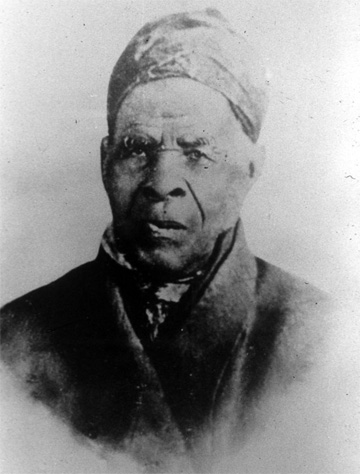 Omar ibn Said was born in Futa Toro, like Ayuba Suleiman Diallo, around 1770. By his own description, ibn Said was “a Fullah Slave,” who lived in Fayetteville, North Carolina. His autobiography, written in 1831, was not his only work in Arabic, but it is the only known Arabic-language autobiography written by an enslaved person in the United States. Though it is brief, Omar’s narrative encompasses his years before enslavement and some of his trials afterward.
In Futa Toro, Omar received twenty-five years of schooling, almost certainly focused on the Qur’an and its interpretation. At the hands of an invading army, he was captured and forced to the coast where he was sold to “a Christian man” in 1807. The slave shipdelivered Omar and the other captives to Charleston, South Carolina, where he was purchased by someone he described as a “small, evil man” who put him to work on a rice plantation. He grated under the work there and escaped the plantation. He fled northward, but was captured and delivered to the jail in Fayetteville, North Carolina. He soon drew attention by writing in Arabic on the walls of his cell.
❤ ❤ . .❤❤ . .❤ ❤. .❤❤. .❤ ❤. .❤❤ . .❤ ❤

South Asia's Africans: A Forgotten People – History
.
South Asian African tribes The first African diaspora of the inhabitants Indan And the surrounding island..❤..❤..❤..❤

"A Bedirxani Kurd of the Kurdish Noble Family Bedirxan, 1889.

The White Turks brought it south into Africa and Mesopotamian areas with them and the Europeans did the same Everywhere else. I suspect that Mr. GoldBERG is also a White person and a White Supremacist.

You have to be careful reading the things that White people write on Judaism and the Hebrew Scriptures. They often inject “Racism” and anti-blackness where it never existed in the first place
يخ محمود الحفيد في مراحل مختلفة من حياته، مع مرافقيه،مع رئيس المرحوم صالح جبر، مع شيوخ عشائر عربية في الجنوب، في اسره وفي أواخر ايامه-3 Baghdad, Kurdistan, Strength.


We find it so strange to use an Albino institution for a modicum of truth in the contrived conversation of lies concerning Arabs, but here it is.
UNIVERSITY OF PENNSYLVANIA - AFRICAN STUDIES CENTER
WHO IS AN ARAB?
W. Montgomery Watt and Pierre Cachia
Over a hundred million people in the world call themselves Arabs. That is to say the least, a potential force in world politics, quite apart from the question of oil. Yet many observers are inclined to doubt whether there is any reality underlying the common use of the term Arab. And it is indeed not easy to define what is meant by an Arab.
The Arabs are not a distinct ethnic group, since there are both white Arabs and black arabs. Some of the Black Sudanese Arabs claim descent ln the male line from Arabs of Mohammed's time, and may well be correct in their claim. Nor is language a sufficient criterion of Arabness since there are many Arabic-speaking jews who are not normally called Arabs. The figure of a hundred million come from the populations of the states in the Arab League. For membership ln the Arab League the primary criterion appears to be language: but, despite the presence of Lebanon, which is half Christian, this tends to be coupled with the acceptance of Arab-Islamic culture.
Modern Arab intellectuals are well aware of the difficulty in defining an Arab. As long ago as December, 1938, a conference of Arab students in Europe, held in Brussels, declared that "all who are Arab in their language, culture and loyalty (or "national feeling") are Arabs." Click here for article online
Which is really another way for the Albino people to say that "We are whatever People we say we are". Thus we are American Indians, Berbers, Egyptians, Persians, and even Jews. (It is interesting to note that the Albino people calling themselves Jews are really just another Turkic tribe (the Khazars). Thus they are the cousins of the Turk Mulattoes they are at war with, over land the Turks took from Blacks).
Tunisian Woman

TUNISIAN WOMANHOOD'S ORNAMENTAL CHARM Gold coins inherited from ancestresses deck the headdress of young Tunisian women, while a wealth of barbaric ornaments is suspended over the bosom. Tattooed marks disfigure their otherwise pleasing faces; often a tattooed cross may be seen, which some aver, though the meaning no longer exists, was the sign whereby the converts, when Christianity swept across North Africa, proclaimed their faith |
Note: Turki is a common "nickname" or even a Proper name in Saudi Arabia.
Webster's dictionary:
Origin and Etymology of turki: Persian turkī, from Turkish Türk.
Definition of Turki
plural -s
Origin and Etymology of turki: Persian turkī, from Turkish Türk.
Definition of Turki
plural -s
1: one of the Turkic peoples
2: any Central Asian Turkic languages particularly of the eastern group.
The reason why Turks have Arab names, is because as they converted to Islam, they took on Arab names. Thus the Turk Alp-Arslan assumed the name of "Muhammad bin Da'ud Chaghri" when he embraced Islam. The Turks of Saudi Arabia will often take the name or nickname "Turki" in deference to their origins. Indigenous Black Arabs do not follow this Turkish tradition.
TO BE CLEAR!
THE ARABIAN PENINSULA IS MAINLY A HOT, HOT, DESERT.
MECCA'S UV (ultra violet) INDEX IS THE MAX. OF (11) FOR MOST OF THE YEAR.


WHITE OR "ALMOST" WHITE PEOPLE COULD NOT SURVIVE IN ARABIA WITHOUT BEING COVERED FROM "HEAD-TO-TOE" WITH CLOTHING!
THE NOTION THAT THESE PEOPLE COULD BE NATIVE TO ARABIA IS A SILLY JOKE TO MOST, AND A CRUEL HOAX TO THOSE "PALE" PEOPLE SO TAUGHT.
As a reminder: THE ARABS NEAR NEIGHBOR IS SUDAN:

THIS IS WHAT SUDANESE LOOK LIKE!

Which is "Exactly" the same phenotype as the "Real" Arabs shown below.
Note: Just as modern Christian culture is far removed from ancient Hebrew culture - it is now European culture. So too is modern Arab culture far removed from original Arab culture - it is now Turkish culture. During the time of the Turkish Ottoman Empire (1299 - 1922), Islam was not known as the Arab religion, it was known as the Turkish religion.
The Thawb (Arab Robes) Emblematic of Arab culture, is not Arab at all. The original Arabs, like the Egyptians, Berbers, Mesopotamian's, Elamites/Persians: had Black skin, they did not need the Head to Toe protection from the Sun that the Thawb affords. It is not known who invented the Thawb, but it is known that even though the Turks once ruled from Baghdad, they hated to go there because of the hot climate and burning Sunshine. Being that the original Turks were a very pale skinned Albino people who needed protection from the Sun, it is likely that they invented the Thawb.
Modern man of Turkic ethnicity in a Thawb

Even with all of the above proofs and logic, we know that there are those delusional "Many" who will still insist that those Turks and Turk Mulattoes are really Arabs. In answer to those delusional people, we offer these comments:
François Auguste Ferdinand Mariette (1821 – 1881) French scholar, Archaeologist, Egyptologist, and the founder of the Egyptian Museum in Cairo.
"OUTLINES OF ANCIENT EGYPTIAN HISTORY"
TRANSLATED AND EDITED, WITH NOTES, BY MARY BRODRICK
With, an Introductory Note by William C. Winslow, D.D., D.C.L.
LL.D., Vice-President of the Egypt Exploration Fund for the United States
With, an Introductory Note by William C. Winslow, D.D., D.C.L.
LL.D., Vice-President of the Egypt Exploration Fund for the United States
CHARLES SCRIBNER'S SONS, NEW YORK, 1892
Page 28
Quote:
"How often do we see in Eastern monarchies and even in European states a difference of origin between the ruling class, to which the royal family belongs, and the mass of the people! We need not leave Western Asia and Egypt; we find there Turks ruling over nations to the race of which they do not belong, although they have adopted their religion. In the same way as the Turks of Baghdad, who are Finns, now reign over Semites, Turanian kings may have led into Egypt and governed a population of mixed origin where the Semitic element was prevalent. If we consider the mixing up of races which took place in Mesopotamia in remote ages, the invasions which the country had to suffer, the repeated conflicts of which it was the theatre, there is nothing extraordinary that populations coming out of this land should have presented a variety of races and origins."
“The inhabitants of this part of Arabia nearly all belong to the race of Himyar. Their complexion is almost as black as the Abyssinians,”-- Baron von Maltzan, 'Geography of Southern Arabia' (1872)
“ [the Hamida are] small chocolate colored beings, stunted and thin… with mops of bushy hair… straggling beards , vicious eyes, frowning brows … armed with scabbards slung over the shoulder and Janbiyyah daggers…” a people “of the great Hejazi tribe that has kept his blood pure for the last 13 centuries…”-- Sir Richard Burton (1879)
“The people of Dhufar are of the Qahtan tribe, the sons of Joktan mentioned in Genesis: they are of Hamitic or African rather than Arab types…”--Arnold Wilson, The Geographical Journal (1927)
“the most prosperous tribe of all the Hamitic group, possessing innumerable camels, herds of cattle and the richest frankincense country. They resemble the Bisharin tribe of the Nubian desert. Men of big bone , they have long faces long narrow jaws, noses of a refined shape long curly hair and brown skin.”--Richmond Palmer (1929)
“Mahra is the Arab name for the Bedouin tribes who are different in appearance to other Arabs, having almost beardless faces, fuzzy hair and dark pigmentation – such as the Qarra, Mahra and Harasis… Also on “…the Qarra, Mahra and Harasis with parts of other tribes. The language is derived from the language of the Sabaeans, Minaeans and Himyarites. The Mahra with other Southern Arabian peoples seem aligned to the Hamitic race of north-east Africa… The Mahra are believed to be descended from the Habasha, who colonized Ethiopia in the first millennium BC”-- David Phillips, Peoples on the Move (2001)
“European observers have made much of their physical resemblance to Somalis and Ethiopians, but there is no historical evidence of any connections.”-- E. Peterson, 'Oman’s Diverse Society: Southern Oman'
“Mr. Baldwin draws a marked distinction between the modern Mahomedan Semitic population of Arabia and their great Cushite, Hamite, or Ethiopian predecessors. The former, he says, ‘are comparatively modern in Arabia,’ they have ‘appropriated the reputation of the old race,’ and have unduly occupied the chief attention of modern scholars.”-- Charles Hardwick (1872)
“Among ‘these Negroid features which may be counted normal in Arabs are the full,rather everted lips, shortness and width of nose, certain blanks in the bearded areas of the face between the lower lip and chin and on the cheeks; large, luscious,gazelle-like eyes, a dark brown complexion, and a tendency for the hair to grow in ringlets. Often the features of the more Negroid Arabs are derivatives of Dravidian India rather than inheritances of Hamitic Africa. Although the Arab of today is sharply differentiated from the Negro of Africa, yet there must have been a time when both were represented by a single ancestral stock; in no other way can the prevalence of certain Negroid features be accounted for in the natives of Arabia.”-- Henry Field, Anthropology Memoirs Volume 4 (1902)
“In Arabia the first inhabitants were probably a dark-skinned, shortish population intermediate, between the African Hamites and the Dravidians of India and forming a single African Asiatic belt with these.”-- Handbook of the Territories which form the Theater of Operations of the Iraq Petroleum Company Limited and its Associated Companies
In scouring for these comments, one can't help but wonder: Who in the hell could possibly believe that Pale people could be native to a Hot land with burning Sunshine and a UV index guaranteed to fry all but the darkest people. It's delusional, just delusional!
A good friend of mine saw this picture, and she said spontaneously:

"this Armenian woman from Shush I - looks similar to the clothes in my Ancestors photos Armenian American, Armenian Culture, Vintage Photos, Iranian Women, My Ancestors, Ottoman Empire, Homeland, Istanbul, There Are.."
I was expecting a cave, I was in total an ear, but unfortunately my open ear was not appreciated anymore.
Who are the ❤ueens of Swaziland?

The Arabs

I don't know why some people think Africa = Black = Slave, it is really possible that ancient Elamites, one of the major powers of the Middle East in the ancient times, were black skinned, also some other peoples who lived in this region like the people whom Herodotus calls "Eastern Ethiopians" (Asiatic Ethiopians).

The early Arabs used the term "red" to describe the fair complexion of "non-Arabs" and their Arabized descendants.
WOMEN MAKING FUEL FROM THE SWEEPINGS OF THE STREETS

| Animal droppings are very largely used for fuel throughout Egypt, as in many parts of Africa, Asia, and South America. In Egypt women collect the material in bushels, and make it into small cakes which they lay out on the sand to dry in the sun as here depicted. When dry the cakes are collected and sold. In the desert camel dung is virtually the only fuel available |
Ancient Egyptian portrait. Berlin | The Afro | original ancient Egyptians were black

Ancient Egyptian portrait. Berlin | The Afro | original ancient Egyptians were black History Books, Egyptian Art, Moorish, African History, Ancient Egypt, Black Hair, Berlin, Afro, Portrait
A Kel Owey girl

A Kel Owey girl - part of the Imakitan Tuareg (formerly called Ikitamen) now located in Niger are known in Arab texts as the KITAMA or KUTAMA Berbers and anciently as the Mauri or Ethiopian colored people called Uacutameni, Micatateni or Mactunia manus. World History, North Africa, Coloured People, Hulk, Egypt, Africans, Texts, Museums
The First Lady Liberty-gift from France.
Sent back because she was black.

More related Genetic data:
Y-dna Haplogroup J-P209 (This is Male dna).
In human population genetics, haplogroups define the major lineages of direct paternal (male) lines back to a shared common ancestor in Africa. Haplogroup J-P209[Phylogenetics 1] is a Y-chromosome DNA haplogroup. Its history since the Iron Age has been tied to the great events and migrations in this area and in particular to the Semitic people.
J-P209 is divided into two main subclades (branches) J-M267 and J-M172.
Haplogroup J-M267
In human genetics, Y DNA haplogroup J-M267[Phylogenetics 1] is a subclade (branch) of Y-DNA haplogroup J-P209,[Phylogenetics 2] along with its sibling clade Y DNA haplogroup J-M172. Men from this lineage share a common paternal ancestor, which is demonstrated and defined by the presence of the SNP mutation referred to as M267, which was announced in (Cinnioğlu 2004). This haplogroup is found today in significant frequencies in many areas in order near the Middle East. For example it is among the most frequent haplogroups in Arabian Peninsula, and parts of the Caucasus, Sudan and the Horn of Africa. It is also found in high frequencies in parts of North Africa Jewish groups especially those with Cohen surnames. It can also be found much less commonly, but still occasionally in significant amounts, in Europe and as far east as the Central Asia.
(White people are Dravidian Albinos who migrated from India into Central Asia in search of cooler climates and less intense Sunshine). Jews (Khazars) are a Turkish tribe, quite distinct from Hebrews.
Haplogroup J-M172
In human genetics, Haplogroup J-M172[Phylogenetics 1] is a Y-chromosome haplogroup which is a subclade (branch) of haplogroup J-P209.[Phylogenetics 2] J-M172 can be classified as Greco-Anatolian, Mesopotamian and/or Caucasian and is linked to the earliest indigenous populations of Anatolia. It was carried by Bronze Age immigrants to Europe, and ultimately descends from the Cro-Magnon population (IJ-M429 Y-DNA) that emerged in Southwest Asia around 35,000 years ago (Sengupta 2006).

In modern Saudi Arabia, the original Arabs (the Black ones) have been relegated to the deserts and the tribal areas in the south at the Yemeni boarder. The preponderance of haplogroup "J" in the Saudi Arabian DNA, suggests that these areas were purposefully avoided or severely under-represented when doing the DNA survey. For it is extremely unlikely that these Qahtan and Wayla tribesmen from the Najran area, close to the border with Yemen, would be of haplogroup "J".


Syrian bedouin or Arabs of "white Syrian" biological descent.

The early Arabs used the term "red" to describe the fair complexion of "non-Arabs" and their Arabized descendants. The phrase "red like a slave" is found in early Arab literature. This was of course before the Turks began bringing large numbers of sub-Saharan Africans into the Near East and North Africa.
Hence a 14th century Syrian said- “Red, in the speech of the people from the Hijaz, means fair-complexioned AND THIS COLOR IS RARE AMONGST THE ARABS. This is the meaning of the saying, ‘…a red man as if he is one of the slaves’. THE SPEAKER MEANT THAT HIS COLOR IS LIKE THAT OF THE SLAVES WHO WERE CAPTURED FROM THE CHRISTIANS OF SYRIA, Rome and Persia.” From Al Dhahabi of Damascus Syria, in Seyar ‘Alam al-Nubala’a, (Biography of Eminent Nobles) cited on p. 55, The Unknown Arabs, 2002, by Tariq Berry.
(The term "white Syrian" was used by Greeks and they were distinguished from people like the "Phoenicians" "Solymi" and Amalekites or Canaanite settlers from the Southern Hijaz and Yemenite area - known as "black Syrians".)
Hence a 14th century Syrian said- “Red, in the speech of the people from the Hijaz, means fair-complexioned AND THIS COLOR IS RARE AMONGST THE ARABS. This is the meaning of the saying, ‘…a red man as if he is one of the slaves’. THE SPEAKER MEANT THAT HIS COLOR IS LIKE THAT OF THE SLAVES WHO WERE CAPTURED FROM THE CHRISTIANS OF SYRIA, Rome and Persia.” From Al Dhahabi of Damascus Syria, in Seyar ‘Alam al-Nubala’a, (Biography of Eminent Nobles) cited on p. 55, The Unknown Arabs, 2002, by Tariq Berry.
(The term "white Syrian" was used by Greeks and they were distinguished from people like the "Phoenicians" "Solymi" and Amalekites or Canaanite settlers from the Southern Hijaz and Yemenite area - known as "black Syrians".)
Haile Selassie Power of the Trinity
King-Cyrus-II-of-Persia (23 July 1892 – 27 August 1975),

The upon of Chengiz Khan’s death in 1575, Ambar left Ahmadnagar to become a commander in Bijapur where he was granted the title Malik. In 1595, he went back to Ahmadnagar, putting himself and his army in the service of another Ethiopian, Abhang Khan. By the turn of the 17th century, Malik Ambar had an army of 10,000 African cavalry and infantrymen.

In 1600, he married his daughter to a 20-year old prince, installed him as sultan, and ruled in his place as regent and prime minister. “It’s an incredible story, and a story that has not received enough attention. But this is a great story. A unique one,” of the mark the African left on Indian history.
This picture was taken during the installation of Haider Khan as Nawab of Sachin.

Painting of a Sidi couple of Bombay (by M.V. Dhurandhar, from the book ‘By-Ways of Bombay’, 1912)

sidi-girl-in-india..❤

Saba - Yemen
Encyclopædia Britannica
Sabaʾ, biblical Sheba, kingdom in pre-Islamic southwestern Arabia, frequently mentioned in the Bible (notably in the story of King Solomon and the Queen of Sheba) and variously cited by ancient Assyrian, Greek, and Roman writers from about the 8th century bc to about the 5th century ad. Its capital, at least in the middle period, was Maʾrib, which lies 75 miles (120 km) east of present-day Sanaa, in Yemen. A second major city was Ṣirwāḥ.
The Sabaeans were a Semitic people who, at an unknown date, entered southern Arabia from the north, imposing their Semitic culture on an aboriginal population. Excavations in central Yemen suggest that the Sabaean civilization began as early as the 10th–12th century bc. By the 7th–5th century bc, besides “kings of Sabaʾ ” there were individuals styling themselves “mukarribs of Sabaʾ,” who apparently either were high priest–princes or exercised some function parallel to the kingly function. This middle period was characterized above all by a tremendous outburst of building activity, principally at Maʾrib and Ṣirwāḥ, and most of the great temples and monuments, including the great Maʾrib Dam, on which Sabaean agricultural prosperity depended, date back to this period. Further, there was an ever-shifting pattern of alliances and wars between Sabaʾ and other peoples of southwestern Arabia—not only the important kingdoms of Qatabān and Ḥaḍramawt but also a number of lesser but still independent kingdoms and city-states.
Sabaʾ was rich in spices and agricultural products and carried on a wealth of trade by overland caravan and by sea. For centuries it controlled Bāb el-Mandeb, the straits leading into the Red Sea, and it established many colonies on the African shores. That Abyssinia (Ethiopia) was peopled from South Arabia is proved linguistically; but the difference between the Sabaean and Ethiopian languages is such as to imply that the settlement was very early and that there were many centuries of separation, during which the Abyssinians were exposed to foreign influences. New colonies, however, seem occasionally to have followed, and some parts of the African coast were under the suzerainty of the Sabaean kings as late as the 1st century bc.
Toward the end of the 3rd century ad, a powerful king named Shamir Yuharʿish (who seems incidentally to be the first really historical personage whose fame has survived in the Islamic traditions) assumed the title “king of Sabaʾ and the Dhū Raydān and of Ḥaḍramawt and Yamanāt.” By this time, therefore, the political independence of Ḥaḍramawt had succumbed to Sabaʾ, which had thus become the controlling power in all southwestern Arabia. In the mid-4th century ad, it underwent a temporary eclipse, for the title of “king of Sabaʾ and the Dhū Raydān” was then claimed by the king of Aksum on the east African coast. At the end of the 4th century, southern Arabia was again independent under a “king of Sabaʾ and the Dhū Raydān and Ḥaḍramawt and Yamanāt.” But within two centuries the Sabaeans would disappear as they were successively overrun by Persian adventurers and by the Muslim Arabs.
"Real" Arabs

Unfortunately, many people think of the ancient Phoenicians and Aram as other than the black Arabians still called Hadahid, Shamran, Kana'an and Aus (Uz) and Araimah (Aram). Some of these movements from the Hijaz Tihama (Yemen) are undoubtedly traceable in the Berber and Tuareg tombs,others in the hausa and Garamantian area.
❤ An Arabian woman in traditional clothing and jewelry ❤

An Arabian woman in traditional clothing and jewelry. [H. N. Hutchinson, 1900] Arabian Costume, Arabian Women, Larp Costumes, Traditional Fashion, Arabian Nights, Historical Clothing, Arabic Beauty, Patras, Arabic Design"

This doesn't mean all Africans came from Arabia (Eastern Ethiopia) but that there was definite movement of groups of these "Eastern Ethiopians" that have contributed to sub-Saharan African populations is not at all far-fetched.
Just as the Celts can be traced through their iron age movements from much further East so can some Africans. Sub-Saharans were not as static or monolithic as most believe on some unconscious level.
Original berbers Egypt, Lady Europe?

Darius king of persia

The Origins And Sins Of Amalek, And The So Called Jew(-)ish People
- Report rights infringement
- published: 03 Apr
- views: 4410
https://www.youtube.com/watch?v=3N1tB-6k7T4
The question I have is why are the Gentile nations whom are in control of this planet suppressing any mention of the people of the book being black? Why is it taboo for the people of the book being anything other than Caucasian? This is a very serious important question to ask yourself. If you are a Christian should it matter if JESUS is black?.. If you are Christian should it matter if the Hebrews are black?...Or the Persian, or Egyptians? These questions are not about it being a Black thing. And this is not about "Replacement Doctrine" what ever the hell that is. This is a rediscovering of what was stolen and what was hidden from the world. And with that, I will speak about the Serpent Seed. naw-khawsh zeh'-rah.
Like I mentioned before we will first clear up a miss conception about this word SERPENT. And learn what it really means. One very important point to keep in mind. The Bible was written by the Greeks. The Greeks taught in parables and metaphors, so this means every word has more than one meaning. So when you research a topic like the Serpent seed you have to take this into consideration. Now I feel that I am getting a little resistance from my former Bible thumper so I need to make this statement. The Ancient Hebrew was translated into Babylonian and Greek for religious purposes. At this time the Babylonians and the Greeks where the enemy. They enslaved or people and stole our history. So for give me if I must go thru it with a fine tooth comb. I advice you to do the same.
TOP
The snake waves his scepter

Okay now the main objection to the Serpent seed doctrian is the Serpent. Is this speaking about a real life reptilian or is this speaking about a man? Dose naw-khawsh mean SERPENT?
Well lets see what the Strongs says.
Strongs Concordence H5175 naw-khawshrefrence root word H5172; a snake (from its hiss): - serpent.
Now thats all it says but did you notice that word HISS? And also H5175 tells us the root word can be found at H5172, and this word "nawkhawsh" is not a snake, but a snake's HISS now this is key. Okay now before I read the definition for H5172 I first want you to know that I took this word naw khawsh translated into its Hebrew letters and when you translate it back into English or Greek you still come up with the word SNAKE, but this word is not used as a noun it is used as a VERB. Now here comes the root meaning for the word naw-khawsh we find it at H5172 a primitive root; properly to hiss, that is, whispera (magic) spell; generally to prognosticate: - X certainly, divine, enchanter, (use) X enchantment, learn by experience, X indeed, diligently observe.
Now lets not overlook this word "PROGNOSTICATE" dose anyone know what this means? Well I didnt so I looked it up and boy was I surprised:
And it reads:
Prog·nos·ti·cate;–verb (used with object) to forecast or predict (something future) from present indications or signs; prophesy. to foretoken; presage: birds prognosticating spring. to make a forecast; prophesy.
So has anyone spoken to a foretune telling snake lately? By now you should understand that Naw-khawsh means to HISS not snake, but to hiss like a snake. Which translates to Whisper a Spell, Enchantment or to learn by experiance. This is discribing a being and the chararctertistics of this BEING. So was Adam and Eve alone in Paridise? Or is there more to the story? Is this a story or a mediphor?Naw-khawsh

נ NUN = SEED | Countinue, Heir, Son
ח CHET = TENT WALL | Outside, Divide, Half
שׁ SHIN = TWO TEETH | Sharp, Press, Eat, Two
So we have the symbol of a SEED which is NUN the ancestors tell us that this means Continue, Heir, Son now take note this is the WORD naw-khawsh that is suppose to mean snake. But when we look at the Anchient Hebrew the first word means SEED NUN. The next symbol a TENT WALL which is CHET and it means Outside Divide Half. So what are they telling us with the use of this?Did this event cast Adam and Eve outside of the garden did this divide them, separate them from Garden? The next symbol is Teeth which is SHIN and it means Sharp, Press, Eat and Two. So what do you do with your teeth? you tear and ripe, you also use your teeth to EAT..."But of the tree of the knowledge of good and evil, thou shalt not eat of it: for in the day that thou eatest thereof thou shalt surely die."
Okay now for those of you still under the spell of deception lets get a third witness. We are going to take this word and place it into the Hebrew Old Testament TANAK, but not just any TANAK, one that is written in Hebrew the Babylonian Hebrew, and it comes with a Strong's Concordance. Now understand this book is written entirely in Hebrew, and it comes with a Strong's Concordance, so it's easy to find the meaning of the WORDS. Now whats interesting about this book is this. When you match this book up with the KJV you will notice that the TANAK adds an extra letter to the WORD. Now this is KEY. Guess which letter they add to the WORD "NAW-khawsh"? YEH pronounced AH the letter for AHYAH. Remmber Abraham Sarah AH.
H 5175 naw-khawsh' This is in HOT with an added name of YAH.
ה HEY = ARMS RAISED | Look, Reveal, Breath
נ NUN = SEED | Countinue, Heir, Son
ח CHET = TENT WALL | Outside, Divide, Half
שׁ SHIN = TWO TEETH | Sharp, Press, Eat, Two
So a question should come to mind. Why did the KJV remove this letter or why did the TANAK add this letter. Was this extra letter added to better define what this being is? Is this letter telling use this BEING is more then just a "snake in paradise?" Keep in mind this letter YEH pronounced AH when translated in the Babylonia Hebrew means T.H.E "THE" which has no meaning compared to the Ancient Hebrew. In the Ancient it means LOOK, REVEAL, BREATH, which is to live to have life. LIFE that was created by The Most High. So this word "naw-khawsh" tells more then just a story about Adam and Eve eating an apple and talking to a snake. This SNAKE was a created BEING. It was talking, expressing, telling stories, telling propheies of futures events, it was seducing beguiling and giving seed. Now you can accept this FACT or go back to sleep, but if you sleep you will be totally unprepaired for the things to come. So a question should come to mind. Why did the KJV remove this letter or why did the TANAK add this letter. Was this extra letter added to better define what this being is? Is this letter telling use this BEING is more then just a "snake in paradise?" Keep in mind this letter YEH pronounced AH when translated in the Babylonia Hebrew means T.H.E "THE" which has no meaning compared to the Ancient Hebrew. In the Ancient it means LOOK, REVEAL, BREATH, which is to live to have life. LIFE that was created by The Most High. So this word "naw-khawsh" tells more then just a story about Adam and Eve eating an apple and talking to a snake.
This SNAKE was a created BEING. It was talking, expressing, telling stories, telling propheies of futures events, it was seducing beguiling and giving seed. Now you can accept this FACT or go back to sleep, but if you sleep you will be totally unprepaired for the things to come.
According to Immanuel Velikovsky:
The Amalekites RULED IN MECCA and from their CENTRAL POSITION on the great peninsula [of Arabia] DOMINATED other Arabian tribes. All parts of Arabia Felix, Arabia Petraea, and Arabia Deserta alike were within reach of their bows. -- Ages in Chaos, Doubleday & Company, Inc. Garden City, N.Y. 1952, p. 61. Okay I read this part to bring your attention to the Line of Shem: LUD to whom was born Pharis,Djordjan,Tasm and AMALEK.Okay now when we read the line of Shem in Genesis 10 this is what we read: The children of Shem; Elam, and Asshur, and Arphaxad, and Lud, and Aram. But WE never read about his son AMALEK. The reason this is because AMALEK did not start with this line either. LUD Married the SEED of AMALEK. The line of Amalek is passed thru the Mother. This is how it mixes with the Hebrews. This is why the Maternal line is so important. Now listen to the line of Esau:
Written by Dawid Yacob Maccabeus
Other website: THE HOUSE OF THE BETHEL
The Arabs
Though by the Albino Mans edict, not a part of Africa. The people of the Arabian Peninsula and Africa have freely interchanged since man first walked the Earth. All of the people of the Desert regions from the Atlantic Ocean to the Persian Gulf share a similar physical type, Black skin color, lifestyle and culture: pale skinned people would not survive long in the Desert.
Some Sabaean/Arab History
Early semitic speakers were represented by more than one physical type. "White Syrians" are Eurasian different than the "black Syrians" or Canaaniyya/Phoenicians/Keftiu/Philistiu etc. who originated in Arabia and were the original Semitic speakers who were associated with Israelite and Arab culture. Early Syrians spoke semitic, Hurrian and other dialects some of which were for the most part adopted FROM earlier Afro-Asiatic midd. easth of Africa populations.These same "white Syrian" related populations have since moved with their genes and culture southward into the Iranian and Arabian peninsula. There are similarly other bearded people portrayed with truly brown skins in King Tuts tomb and in other paintings. Some of those paintings of brown bearded men the people are called Fenkhu that is Phoenicians.

❤..Beautiful Namibia❤ classically women..❤

One of the great mysteries
of the world. How are the Himba women of Namibia so classically beautiful, overall? I’m not talking about ‘exotic’ beauty, I’m talking about straightforward, symmetrical featured, almos

Young Dinka women who reside in a Jur village near Rumbek (Sudan). 1927 From Hugo A. Bernatzik’s book: Nil und Kongo

Sénégal Tribal Women, Indian Tribes, Chain Mail, Goddesses❤

(1882-1928) Dakar (Sénégal)1898 Tribal Women, Indian Tribes, Chain Mail, Goddesses, Culture, Portrait, Biographies, Artwork, Artists"
This Is The Reason Why God Created The Man: and not Adam & Steve!
AND TOGETHET WE SHALL WE BEND TOTAL TO THE GROUND, AND THANK YOU ON OUR BLACK KNIFES. AND INDEED YOU ARE REALLY A TRUE LOVE GREATER.
❤ Young Dinka W❤man in Corset ❤

Dinka Woman in Corset African Women, African Art, African Tribes, African Culture, Young Women, A Young, Marriage, Fisher, Anthropolog
I remember the original Nuba Marriage Ritual, when the man is choosing her future wife, his pretender women could put her vagina in his face and urinate in him, but he will not commit none violence against her.

The things only changed when people begin to use the name of god to justify the bad things they do.
And finally - the "Arab" Slave traders were also Blacks (the Omani).
Spanking a tied slave girl with a whip

Slavery was excused in the NewTestament. The Old Testemant was abrogated by the New Testament, which by no means justified slavery. Of course the Catholics screwed up everything in the process, and the slavery issue through the Shem and Ham story, but you cannot accuse the original Christian teachings as promoting slavery.So, how many slaves work for you today?
http://slaveryfootprint.org/ I had no idea Jesus returned to Brazil and taught you religion. Tell me more about it!
I don't think Brazil was the greater exploiter of slavery per capita, Brazil is simply too large a country. Anyway, according to This map:

...4% of the population of Mauritania are slaves, but India tops the chart since it has more than 1.2 billion people, and 1.1% of its' population are slaves, which means more than 13 million slaves live in India today.
What was the maximum number of slaves in Brazil ever?
Yes, stupidity makes wonders, but you have lost the plot dear!!!
http://en.wikipedia.org/wiki/Slavery_in_Brazil
ONE OF THE DEFENCELESS HUMAN BEING SOLD IN MOROCCO

ONE OF THE DEFENCELESS CHATTELS OF THE HUMAN MART

| Only in the nature of the "goods" does the slave market differ from any other market in Morocco; the slaves being sold by auction and brought out in lots or singly, to be inspected by the buyers. The condition of a woman slave is pitiful in the extreme, and there are very few bright spots in her domestic servitude, which is but a round of cruel adversities |
Israelites in West Africa

The man seated is an Ashanti Levite. The Ashanti claim they are the dispersed descendants of the biblical inhabitants of Ashan.(Josh. 19:7 & 1Ch. 6:59)
Source: "HEBREWISMS OF WEST AFRICA"
by Joseph J. Williams, S.J.
Biblo and Tannen Publishers
p.82, Ashanti Ambassadors.
CLOSE-UP OF ASHANTI PRIEST
Notice his head cover, and especially his breastplate necklace.
The breastplate contains twelve jewels, three are arranged across in four horizontal rows. This is exactly according to the Breastplate designed for the High Priest of Israel.(Exodus 28:15-27)
And, although any Israelite may wear a head cover; Israelite Priests "must" wear head covers (a.k.a. bonnets) when on duty (ref. Ex. 28:40 & Ex. 39:28).
You know Old Testament, New Testament... What if Quran is The Last Testament? What do you think?
That would make no sense as Yesua fullfilled the Old Testament. If we accepted the Quran as the last testament, then the original sin, the death and ressure tion of Christ, man's victory over death etc would make no sense.
Besides, in the context of the Sermon on the Mount, Christ spoke to the multitudes, few of whom or none of whom were theologians, but simple agrarians. In Matt. 7:15-20, Christ uses unambiguous language about discerning the truthfulness of prophets:
7:15 Watch out for false prophets. They come to you in sheep’s clothing, but inwardly they are ferocious wolves. 16 By their fruit you shall know them. Do people pick grapes from thornbushes, or figs from thistles? 17 Likewise every good tree bears good fruit, but a bad tree bears bad fruit. 18 A good tree cannot bear bad fruit, and a bad tree cannot bear good fruit. 19 Every tree that does not bear good fruit is thrown into the fire. 20 Thus, by their fruit you shall know them.
What are the fruits of Islam again?
The bloodshed is the difference, the evidence of the " true" god. If the creature of the imagination is more valuable at the human life and basically everything in this life, than that is divine. If not, than mumbo jumbo only. The Christian god is dead, but the Jew-ish and the Muslim is not. The mass murders of these true believers is the evidence onto this statement, since an transcendence power is real for them. And what other reality exist here, than the reality of the man?
But is bloodshed the only testament to the true mithy Yah, Almithy YAHUDAH?
I disagree with that. His 'will' would be manifest in other ways, in the power to beget followers who are truly faithful. and who keeps his statutes and commandments.
Was Queen Charlotte Black?
... a teenage bride, married King George III. Two weeks later, Princess Charlotte was crowned Queen Charlotte of Great Britain and Ireland.
http://www.newgrowthhair.com/2015/02/queen-charlotte/

( " Tolerance and Apathy are the last virtues of a dying society '' - Aristotle. )
A tale of two next-door neighbors:
Yemen and Oman
one mostly populated and ruled by people native to the land (Oman),
the other mostly populated and ruled by the mulatto descendants of invaders (Yemen).
Yemen was the home of the Sabaeans (biblical Sheba), a trading state that flourished for over a thousand years and probably also included parts of modern-day Ethiopia and Eritrea. In 275 AD, the region came under the rule of the later Jewish-influenced Himyarite Kingdom. Christianity arrived in the fourth century, whereas Judaism and local paganism were already established.
Islam spread quickly in the seventh century and Yemenite troops were crucial in the expansion of the early Islamic conquests. Administration of Yemen has long been notoriously difficult. Several dynasties emerged from the ninth to 16th centuries, the Rasulid dynasty being the strongest and most prosperous. The country was divided between the Ottoman and British empires in the early twentieth century.
The Zaydi Mutawakkilite Kingdom of Yemen was established after World War I in North Yemen before the creation of the Yemen Arab Republic in 1962. South Yemen remained a British protectorate known as the Aden Protectorate until 1967. The two Yemeni states united to form the modern republic of Yemen in 1990.
Yemen is a developing country, and the poorest country in the Middle East. Under the rule of President Ali Abdullah Saleh, Yemen was described as a kleptocracy. According to the 2009 international corruption Perception Index by Transparency International, Yemen ranked 164 out of 182 countries surveyed.
Kleptocracy
Kleptocracy, alternatively cleptocracy or kleptarchy: ("rule by thieves") is a term applied to a government seen as having a particularly severe and systemic problem with officials or a ruling class (collectively, kleptocrats) taking advantage of corruption to extend their personal wealth and political power. Typically this system involves the embezzlement of state funds at the expense of the wider population, sometimes without even the pretense of honest service.
Yemen Demographics:
Yemen's population is 24 million by 2014 estimates. Yemeni ethnic groups are predominantly Arab, followed by Afro-Arabs, South Asians and Europeans. When the former states of North and South Yemen were established, most resident minority groups departed. Yemen is a largely tribal society. In the northern, mountainous parts of the country, there are 400 Zaidi tribes. There are also hereditary caste groups in urban areas such as Al-Akhdam. There are also Yemenis of Persian origin. Note; the Zaidi Houthis, now at war for control of Yemen, are said to have occupied Northern Yemen since about 869 A.D.
The degeneracy of Albinos and their mulattoes is apparent in the above demographic. A true Arab looks exactly like an African, how could they tell the difference? Because Albino media prefers to not show indigenous Blacks in what they want known as "Arab lands" (really invader lands), we will show them.
Original Yemeni People

Yemen was the home of the Sabaeans (biblical Sheba), a trading state that flourished for over a thousand years and probably also included parts of modern-day Ethiopia and Eritrea.
Additional Art of Medieval and Renaissance era Blacks in Europe Iberian Peninsula, Southern France, The Gentleman, African History, Crusaders, Moorish, Black People, Civilization, Afro..

And finally - the "Arab" Slave traders also Blacks (Omani Amalekites).

The Ottoman Turks nominally occupied the area from 1538 to the decline of their empire in 1918.

The country was divided between the Ottoman and British empires in the early twentieth century.
The northern portion of Yemen was ruled by imams until a pro-Egyptian military coup took place in 1962. The junta proclaimed the Yemen Arab Republic, and after a civil war in which Egypt’s Nasser and the USSR supported the revolutionaries and King Saud of Saudi Arabia and King Hussein of Jordan supported the royalists, the royalists were finally defeated in mid-1969.
Ideological differences provoked conflicts between pro-Soviet South Yemen and pro-Western North Yemen in 1972 and 1979.
 Albinos and ignorant Negroes have created any number of hysterical stories about the Arab (Omani) Slave trade. Saying that the Arab slave trade typically dealt in the sale of castrated male slaves (men and boys), that perhaps millions were castrated, so they couldn't reproduce and pollute their White host countries. |


| Commerce with foreigners at the ports on the eastern coast of Madagascar has resulted in the Betsimisaraka adopting a mixture of European and native costume, to the great disadvantage of their appearance. These women, whose home is at Betsizaraina, south of Tamatave, wear the Malagasy lamba over ill-cut bodices, with a slatternly effect heightened by their untidily-twisted curls |
FEMININE DIGNITY ENHANCED BY GRACEFUL DRAPERY

| Wholly admirable in contrast to that of the hybrid costume worn by the Betsimisaraka women shown above is the effect of the purely native costume worn by these Sakalava girls of the western coast. Drapery could not be better arranged than the lamba upon the fine second figure from the left, and the perfect simplicity of the entire costume is a triumph of seemly art. It will be noticed that each has arranged her costume with tasteful difference, contrasting brown skin with colourful cloth. Africa | Lawbe (Lahobé) woman. Senegal. ca. 1905 | Scanned old postcard; Collection Générale Fortier  |
Warrior Queen Nzinga Mbande (1583-1663)

Queen Nzinga Mbande (1583-1663) In the 16th century, the Portugese shifted their slave-trading to the Congo and South West Nubia Here, they faced the brilliant and courageous Queen Nzinga, who was determined never to accept their conquest of her country. An exceptional stateswoman and military strategist, she harassed the Portugese until her death at 80. Portugal would not have control of the interior until the 20th century. African Royalty, West Africa, African History, Womens History, African Culture, Warrior Princess, Warrior Queen, Ruler, Anti Portuguese.
ND HER CONTRIBUTIONS TO BRITAIN
Sophie Charlotte was descended directly from an African branch of the Portuguese Royal House, Margarita de Castro y Sousa. Six different lines can be traced from Princess Sophie Charlotte back to Margarita de Castro y Sousa.

Born Date: Tue, 1744-05-19
Charlotte was the eighth child of the Prince of Mirow, Germany, Charles Louis Frederick, and his wife, Elisabeth Albertina of Saxe-Hildburghausen. In 1752, when she was eight years old, Sophie Charlotte's father died. As princess of Mecklenburg-Strelitz,
She married George III of England on September 8, 1761, at the Chapel Royal in St James’s Palace, London, at the age of 17 years of age becoming the Queen of England and Ireland.
Queen Charlotte, wife of the English King George III (1738-1820), was directly descended from Margarita de Castro y Sousa, a black branch of the Portuguese Royal House. The riddle of Queen Charlotte's African ancestry was solved as a result of an earlier investigation into the black magi featured in 15th century Flemish paintings. Two art historians had suggested that the black magi must have been portraits of actual contemporary people (since the artist, without seeing them, would not have been aware of the subtleties in colouring and facial bone structure of quadroons or octoroons which these figures invariably represented) Enough evidence was accumulated to propose that the models for the black magi were, in all probability, members of the Portuguese de Sousa family. (Several de Sousas had in fact traveled to the Netherlands when their cousin, the Princess Isabella went there to marry the Grand Duke, Philip the Good of Burgundy in the year 1429.)
Perhaps the most literary of these allusions to her African appearance, however, can be found in the poem penned to her on the occasion of her wedding to George III and the Coronation celebration that immediately followed.
Descended from the warlike Vandal race,
She still preserves that title in her face.
Tho' shone their triumphs o'er Numidia's plain,
And and Alusian fields their name retain;
They but subdued the southern world with arms,
She conquers still with her triumphant charms,
O! born for rule, - to whose victorious brow
The greatest monarch of the north must bow.
Finally, it should be noted that the Royal Household itself, at the time of Queen Elizabeth II's coronation, referred to both her Asian and African bloodlines in an apologia it published defending her position as head of the Commonwealth.
PORTRIAT OF A BLACK SLAVE ?

A black Royalty Without name, The Truths Black Native of American.

King Henry II England

King Henry II England - Google Search Plantagenet, King Richard, King Henry, King King, King Queen, British History, Uk History, Tudor History, European History

Santa Claus was a Black Muurish European Nicholas, was probably born during the third century in the village of Patara, in what is now the southern coast of Turkey. He was born of very wealthy ethnic black Anatolians of the ancient Roman Empire. He was one of those ancient and dominant black Muurs of Europe that you only fleetingly come across in today’s western history, because the Gothic Europeans would hide the true Muurish history in Europe.
Santa Claus

A black Royalty Without name, yes sir, as usual: That eternal unreasonable cherish hatred and envy, against the Children of the Sun. |Gemäldegalerie, c. 1520?

Anonymous artist (Netherlandish) The Adoration of the Magi (detail) Netherlands/Belgium (?.c. 1520) Gemäldegalerie, Berlin photo via Frances d’Ath African History, African Art, History Photos, Art History, Black Artwork, Historical Art, Western Art, Black People, Anonymous"
He was the only African Samurai ever recorded in written history. He was a Mozambican who learned from the Japanese Shogun Oda Nobunaga in the 16th century. African American History, The Japanese, Japanese Names, Japanese History, Black People, 16th Century, Samurai, Africans, The Black


Zumbi Dos Palmares | Zumbi was a famous freedom fighter who … | Flickr History Timeline, History Facts, African Diaspora, African American History, Medical School, World History, Black Art, South America, Africans
Because You Eating With The Serpent At The Round Table.
We face death with clean hand and spear
at your table.
Africa | A Dinka Warrior Does not need a gun

Ishmailites And his generation self be as a wild man

https://en.wikipedia.org/wiki/Amalek


Codifying Freedom
The United States Supreme Court.

The Supreme Court Justices in Washington, D.C.

- This relief, displayed above the seats of the Supreme Court justices in Washington, D.C., shows the profound place of the Judeo-Christian law of Moses in our government. The first half of the Decalogue is covered by a knee. It suggests that man's obligation to God is a matter of each person's conscience, but the right side of the table of the law is to be enforced by the state.
Only Truth Can Set You Free

With the stones that throw them to us, with the same stones we will build our roads forever Forward.
Only the truth can set you free, because ''He the truth'' is without boundaries
Africa is the inventor of many things. So like the Corset, for Women & Man.
We thank you for your time.
Written by Dawid Yacob MaccabeusOther website:
Hidden Messenge to the Nation of AHYAH
In Secret Collaboration
THE BAD WAR: The REAL story of World War II / Hitler /
─────────────────────░██░▇▆▅▄▃▂
────────────────────░█▓▓█░▇▆▅▄▃▂
───────────────────░█▓▓▓█░▇▆▅▄▃▂
──────────────────░█▓▓▓▓▓█░▇▆▅▄▃▂
─────────────────░█▓▓▓▓▓█░▇▆▅▄▃▂
──────────░░░───░█▓▓▓▓▓▓█░▇▆▅▄▃▂
─────────░███░──░█▓▓▓▓▓█░▇▆▅▄▃▂
───────░██░░░██░█▓▓▓▓▓█░▇▆▅▄▃▂
──────░█░░█░░░░██▓▓▓▓▓█░▇▆▅▄▃▂
────░██░░█░░░░░░█▓▓▓▓█░▇▆▅▄▃▂
───░█░░░█░░░░░░░██▓▓▓█░▇▆▅▄▃▂
──░█░░░░█░░░░░░░░█▓▓▓█░▇▆▅▄▃▂
──░█░░░░░█░░░░░░░░█▓▓▓█░▇▆▅▄▃▂
──░█░░█░░░█░░░░░░░░█▓▓█░▇▆▅▄▃▂
─░█░░░█░░░░██░░░░░░█▓▓█░▇▆▅▄▃▂
─░█░░░░█░░░░░██░░░█▓▓▓█░▇▆▅▄▃▂
─░█░█░░░█░░░░░░███▓▓▓▓█░▇▆▅▄▃▂
░█░░░█░░░██░░░░░█▓▓▓▓▓█░▇▆▅▄▃▂
░█░░░░█░░░░█████▓▓▓▓▓█░▇▆▅▄▃▂
░█░░░░░█░░░░░░░█▓▓▓▓▓█░▇▆▅▄▃▂
░█░█░░░░██░░░░█▓▓▓▓▓█░▇▆▅▄▃▂
─░█░█░░░░░████▓▓▓▓██░▇▆▅▄▃▂
─░█░░█░░░░░░░█▓▓██▓█░▇▆▅▄▃▂
──░█░░██░░░██▓▓█▓▓▓█░▇▆▅▄▃▂
───░██░░███▓▓██▓█▓▓█░▇▆▅▄▃▂
────░██▓▓▓███▓▓▓█▓▓▓█░▇▆▅▄▃▂
──────░█▓▓▓▓▓▓▓▓█▓▓▓█░▇▆▅▄▃▂
──────░█▓▓▓▓▓▓▓▓▓▓▓▓▓█░▇▆▅▄▃▂
████──░█▓████▓▓▓▓▓▓▓▓█░░▆▅▄▃▂
█──█──████──████▓▓▓▓▓█░░▇▆▅▄▃
█──█──█──█──█──████████──────
█──█──████──█──█──────█──────
█──█──█──█────██──██──█──────
█──████──█──█──█──────█──────
█─────█──█──█──█──█████──────
███████──████──█──────█──────
──────████──██████████───────


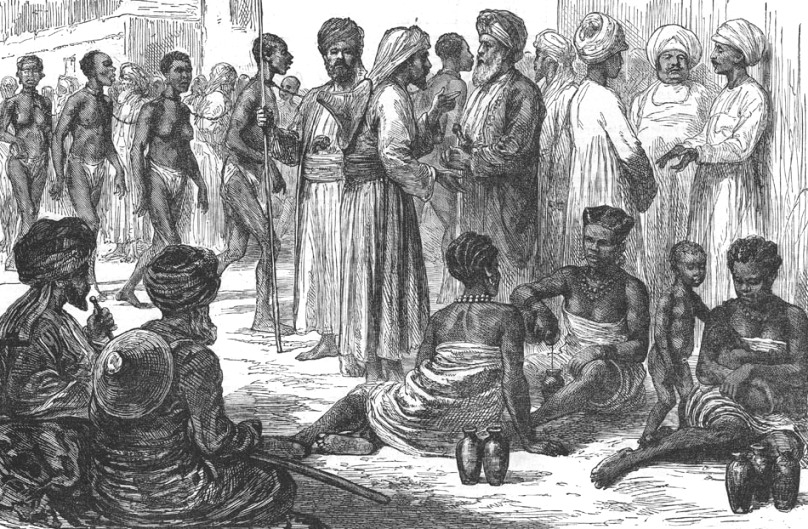

0 Comments